Introduction
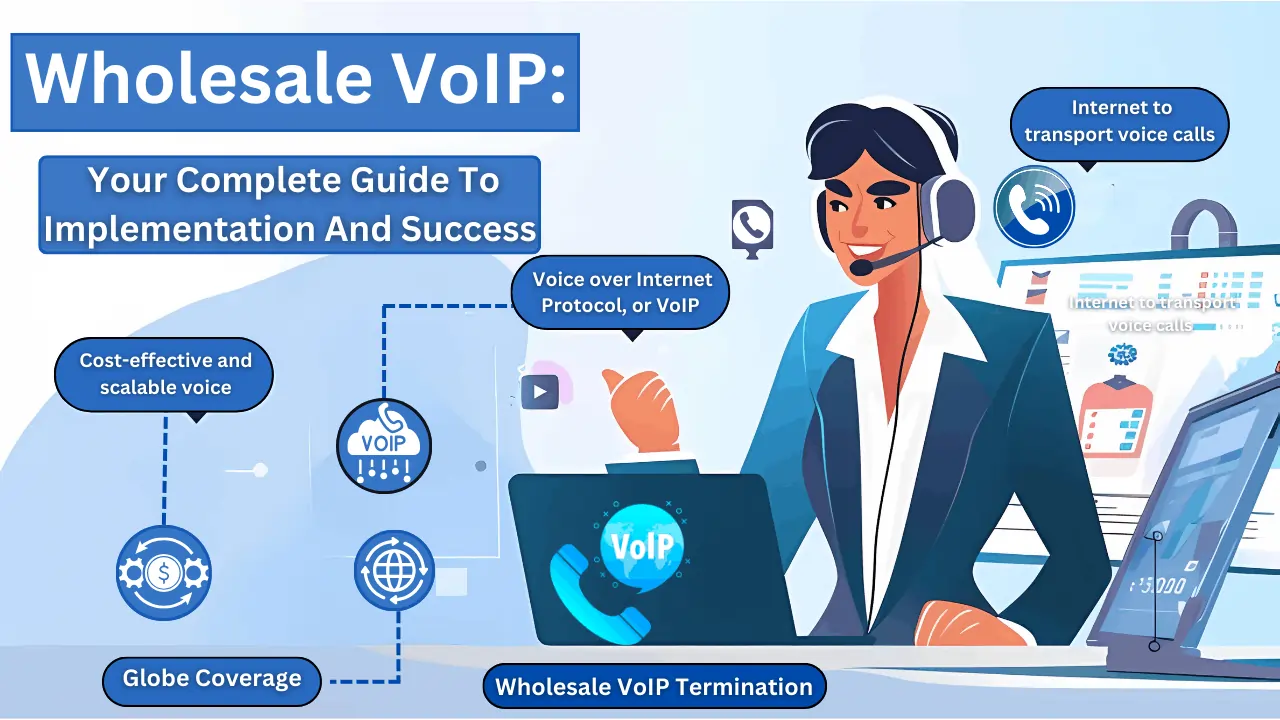
Wholesale VoIP has reshaped business communication in the US — and the numbers prove it. The global wholesale voice market reached $44.5 billion in 2026, with North America holding the largest market share.
Businesses that buy voice minutes in bulk pay a fraction of traditional per-minute rates, giving them room to scale without bloating their telecom budget.
Teloz has operated in the wholesale VoIP space since 2005.
In 20 years, the platform has grown from a network software developer into a fully cloud-native contact center and wholesale voice solution — serving call centers, carriers, and enterprises that need CLI routes, fast activation, and real-time traffic visibility.
This guide covers exactly how wholesale VoIP works, what types of services are available, how call termination is structured, and what to look for when choosing a provider.
- What wholesale VoIP is and how it differs from retail voice services
- Step-by-step breakdown of how voice termination works
- Key components: carriers, origination, termination, and QoS
- Types of wholesale services — toll-free, DIDs, CLI routes, A2P SMS
- US compliance: STIR/SHAKEN and FCC robocall mitigation requirements
- Why Teloz has delivered wholesale voice and contact center software since 2005
What is Wholesale VoIP?
Wholesale VoIP (Voice over Internet Protocol) is a business model in which companies purchase large volumes of voice minutes at bulk rates and resell or consume them for communication.
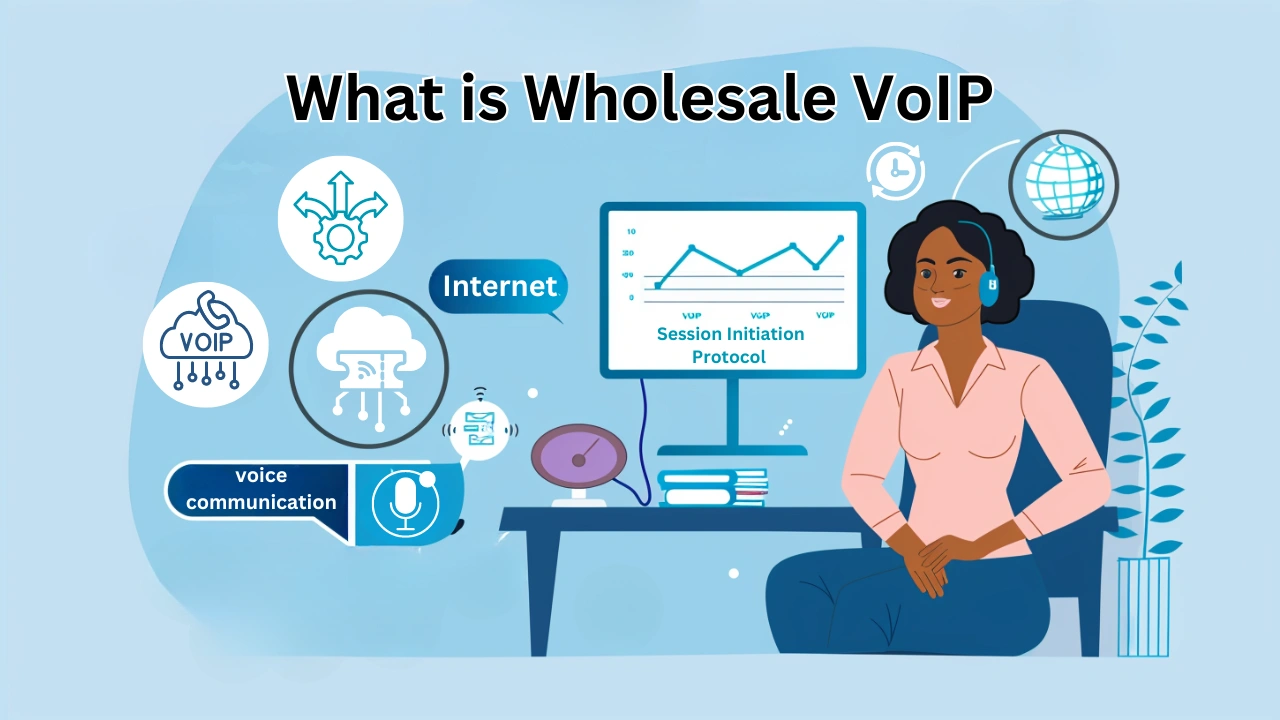
Instead of paying retail per-minute prices on traditional phone networks, wholesale buyers access discounted rates through VoIP carriers — transmitting calls as digital packets over the internet rather than circuit-switched lines.
The model reduces infrastructure costs, eliminates per-line hardware, and scales with demand.
A call center handling 10,000 calls per day pays significantly less per minute through a wholesale VoIP agreement than through standard retail service.
Key advantages:
- Lower per-minute costs through bulk purchasing
- No traditional landline infrastructure required
- Scales from hundreds to millions of minutes without hardware changes
- Supports international calling through global carrier interconnections
- Works with existing SIP-enabled phone systems and IP-PBX
How Wholesale VoIP Services Work: Step-by-Step
1. Purchasing Voice Minutes: Businesses select a VoIP carrier and purchase bulk voice minutes at wholesale rates.

Volume tiers determine pricing — the more minutes purchased, the lower the per-minute cost. Teloz offers CLI (Caller Line Identification) and Non-CLI routes, with rates that vary by destination and quality tier.
2. Routing Calls Through Networks: Once minutes are purchased, calls route through the carrier's IP network.
Intelligent routing engines select the optimal path based on destination, call quality metrics, network congestion, and cost — a process called Least Cost Routing (LCR).
Teloz provides real-time call monitoring through its analytics dashboard, giving businesses visibility into call volume, completion rates, and quality metrics as calls happen — not after the fact.
3. Bulk Voice Termination: Voice termination is the final delivery of a call to its destination network.
Carriers use their interconnections with other networks (including Public Switched Telephone Network gateways, mobile networks, and international carriers) to complete calls.
Teloz handles termination across CLI, Non-CLI, and call center routes — with fast activation so new accounts go live quickly.
Example flow:
- Company A purchases 100,000 voice minutes from Teloz
- Calls route through Teloz's network using LCR to find the optimal path
- Teloz terminates calls to destination networks across the US and internationally
- Real-time dashboards show call volume, completion rates, and quality in live view
Key Components of Voice Termination
Understanding the components of voice termination helps businesses make better purchasing and routing decisions.
- Carriers — own and operate the network infrastructure used to route voice calls between regions. They are the backbone of any wholesale VoIP operation, connecting different networks and enabling calls to cross borders, carriers, and technologies.
- Voice Termination Providers — act as intermediaries that purchase traffic from carriers and route it to end-users or business networks. Teloz, founded in 2005, aggregates routes and delivers them to businesses at competitive wholesale rates.
- Call Origination — the process of initiating a call and establishing the connection between a caller and the VoIP provider's network.
- Call Termination — the delivery of a call to its destination network and final recipient, involving handoff to the correct carrier for the destination country, region, or number type.
- Quality of Service (QoS) — measures that ensure calls maintain clear audio, low latency, and minimal packet loss. Teloz's real-time analytics surfaces completion rates, latency, and jitter in a live dashboard accessible to account managers and supervisors.
Step-by-Step Guide to Voice Termination
The voice termination process is systematic and involves several stages to ensure efficient and high-quality communication. Let's take a closer look at how each step works:
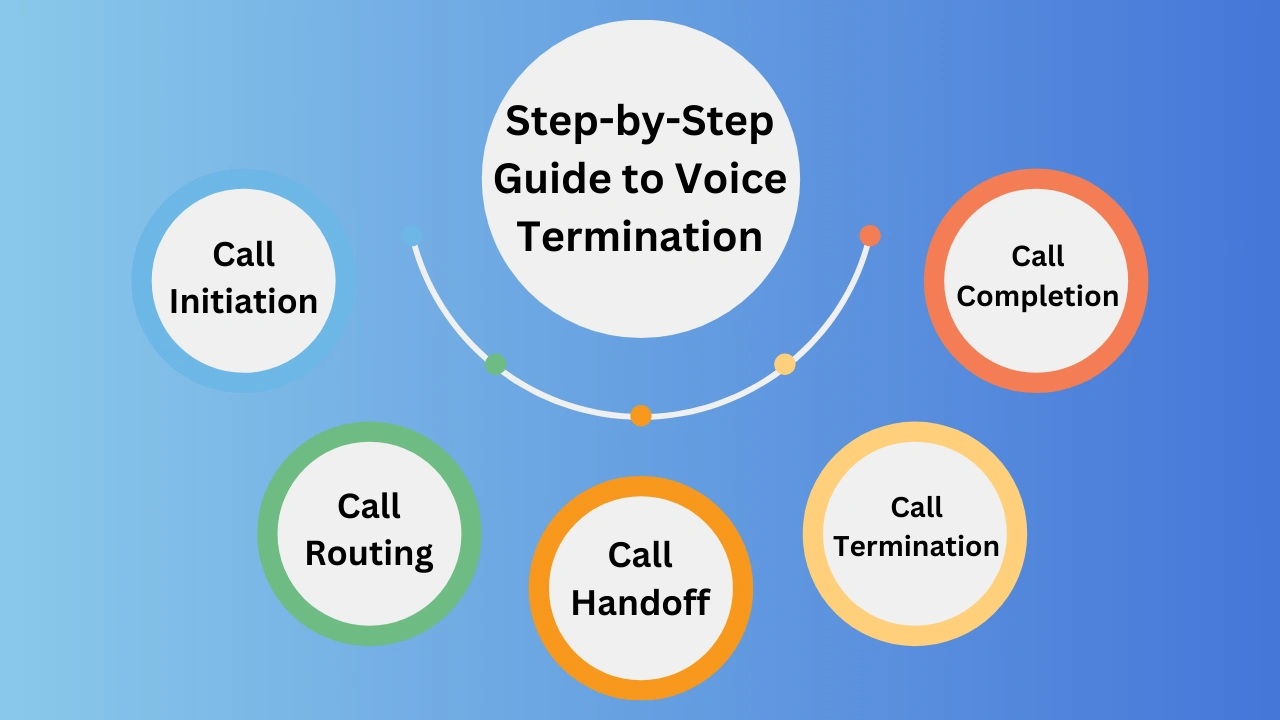
1. Call Initiation: A caller or automated system initiates the call, triggering the voice termination process and establishing the connection to the VoIP provider's routing engine.
2. Call Routing: The routing engine evaluates multiple paths — factoring in destination, quality history, network congestion, and cost — before selecting the optimal route. LCR algorithms run this evaluation in milliseconds.
3. Call Handoff: The call transfers from the originating network to the termination provider's network. This handoff maintains call quality and session continuity using SIP (Session Initiation Protocol).
4. Call Termination: The termination provider delivers the call to the destination network. For international calls, this involves handoff to a local carrier in the destination country who completes the final connection.
5. Call Completion: The call connects to the recipient. All data — duration, destination, quality metrics — is logged in Call Detail Records (CDRs) for billing verification and traffic analysis.
Types of Wholesale VoIP Services
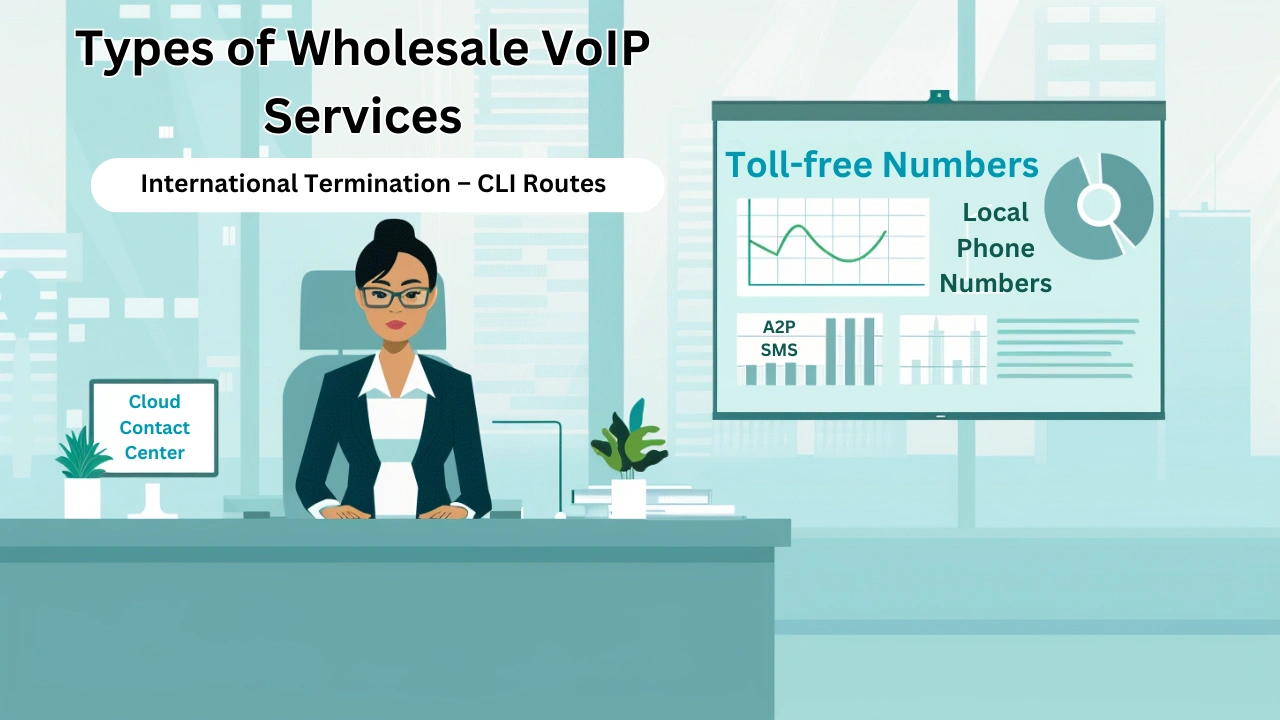
Wholesale VoIP providers offer a range of services beyond voice termination. These services are designed to enhance communication capabilities for businesses:
- Toll-Free Numbers — allow customers to call businesses at no charge to the caller. Essential for customer support and inbound marketing in the US market.
- Local Phone Numbers (DIDs) — Direct Inward Dialing numbers give businesses a local presence in specific US area codes or international markets, improving answer rates and customer trust.
- International Termination — CLI Routes — CLI (Caller Line Identification) routes ensure the caller's number displays correctly to the recipient. For international calls, CLI routes are the standard for professional business communication.
- A2P SMS — Application-to-Person messaging enables businesses to send automated texts — appointment reminders, OTPs, transaction alerts, and marketing messages — at scale.
- Cloud Contact Center — Teloz's platform combines wholesale VoIP with AI-powered routing using NLP and machine learning, real-time analytics dashboards, and 100+ app integrations. Unlike standalone wholesale providers, Teloz offers the full stack — bulk voice capacity plus contact center software — in one platform, with no hardware required.
The Advantages of Wholesale Voice Termination
Wholesale voice termination offers several key advantages for businesses that process high call volumes:
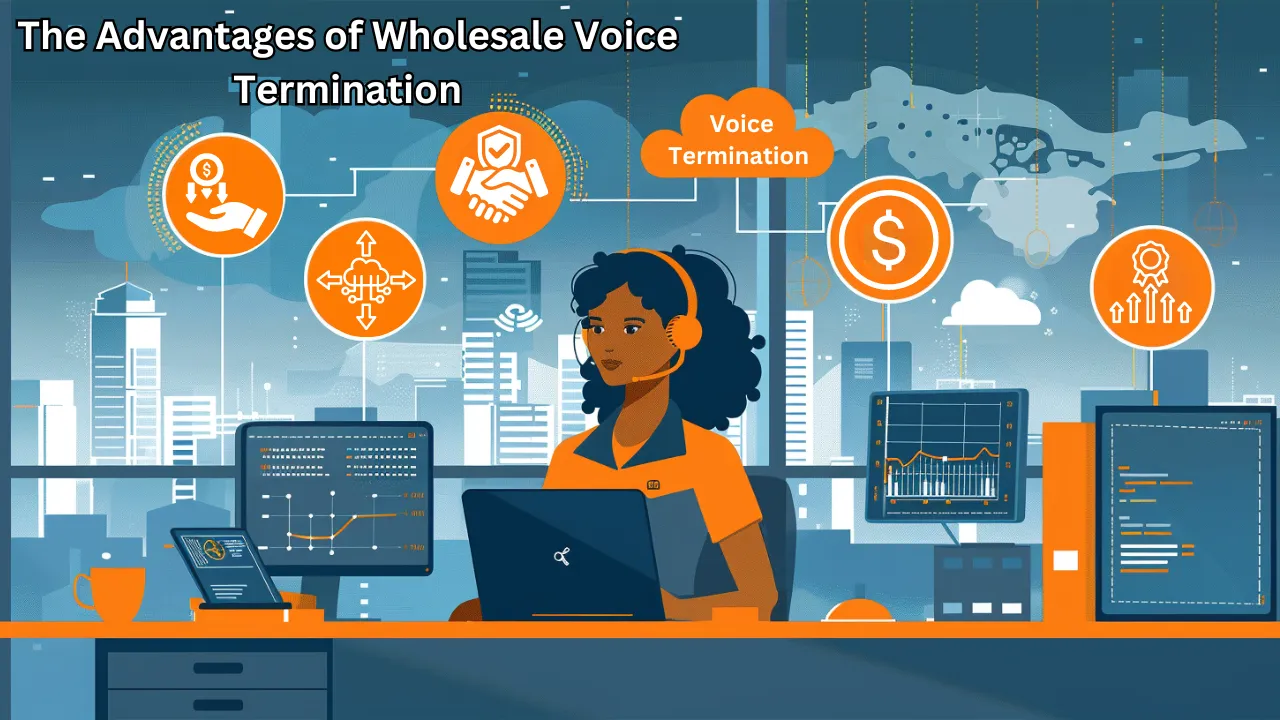
- Cost Savings — bulk purchasing and LCR routing reduce per-minute costs significantly compared to retail voice. For US businesses processing high call volumes, the savings compound quickly.
- Scalability — add call capacity instantly as demand grows. Wholesale VoIP scales from hundreds to millions of minutes without infrastructure changes or hardware procurement delays.
- Quality and Reliability — route-tier options, real-time quality monitoring, and redundant network paths maintain consistent call quality across fluctuating traffic volumes.
- Flexible Pricing Models — per-minute, per-second, and volume-based pricing options let businesses match costs to their actual usage patterns.
- Competitive Advantage — lower communication costs free budget for customer experience improvements, agent hiring, or technology investment.
What are the Benefits of Becoming Wholesale VoIP Providers?
Becoming a wholesale VoIP provider opens up numerous opportunities for growth and expansion in the global voice market:
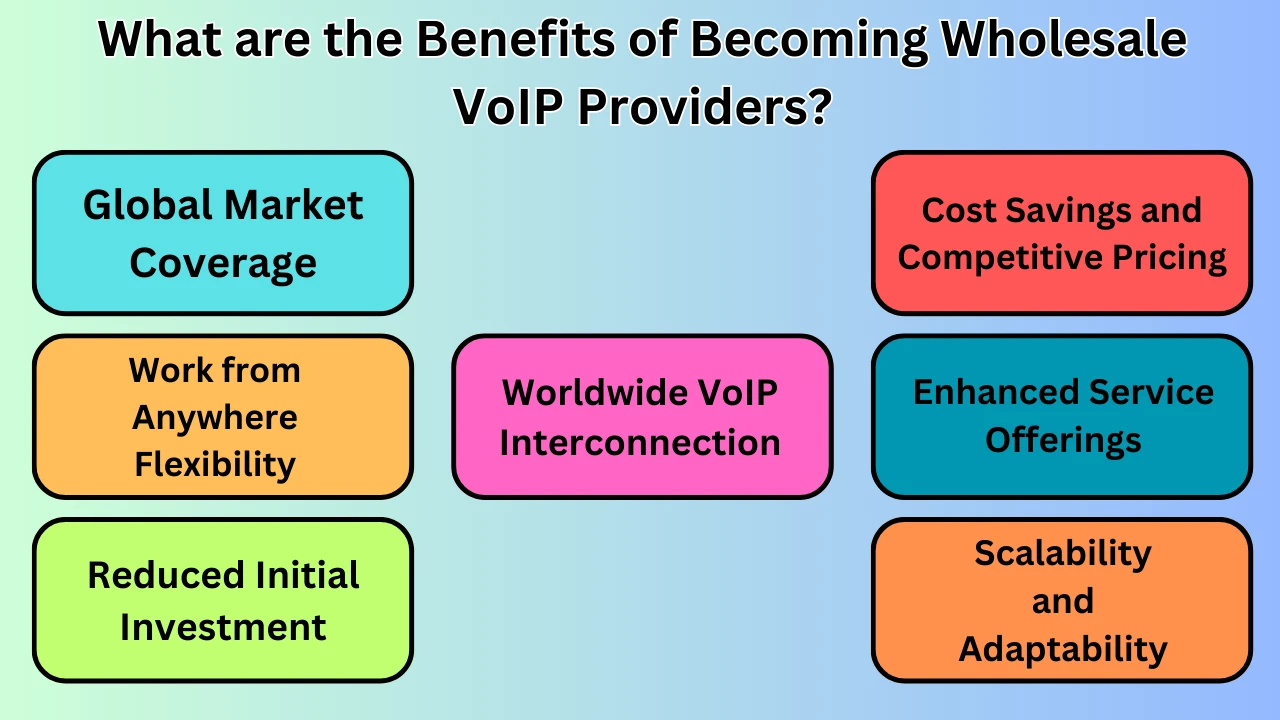
- Global Market Reach — wholesale VoIP services open access to customers across US states and international markets without building physical network infrastructure.
- Flexible, Remote Operations — VoIP operations run entirely online. Businesses can manage voice services from any location with internet access.
- Lower Initial Investment — starting a wholesale VoIP reseller business requires minimal upfront capital compared to traditional telecom. No hardware, no switching equipment, no NOC buildout.
- Worldwide Interconnection — provider partnerships allow resellers to offer calling to virtually any destination globally, backed by established carrier interconnections.
- Higher Margins on Voice Services — wholesale rates plus retail pricing creates margin. As volume grows, per-minute costs drop and margins expand.
- Advanced Feature Stack — resellers can offer call forwarding, voicemail, IVR, call recording, and analytics as part of their service — features that retail customers pay premiums for.
Protecting Against Illegal Robocalls (US Compliance)
In the US, wholesale VoIP providers and their customers must comply with FCC regulations around robocall mitigation. Key requirements:
- STIR/SHAKEN — the Secure Telephone Identity Revisited / Signature-based Handling of Asserted Information Using Tokens framework authenticates caller ID to prevent spoofing. US carriers are required to implement STIR/SHAKEN on IP networks.
- Robocall Mitigation Database (RMD) — providers that cannot fully implement STIR/SHAKEN must file a robocall mitigation plan with the FCC's Robocall Mitigation Database. All US voice providers must be registered.
- Built-in Fraud Protection — quality wholesale VoIP switches include fraud detection tools that flag unusual calling patterns — spikes in international traffic, impossible call sequences, and other indicators of toll fraud or unauthorized use.
“Businesses that buy voice minutes in bulk pay a fraction of traditional per-minute rates — giving them room to scale without bloating their telecom budget.”
Why Teloz for Wholesale VoIP
Teloz has operated as a network software developer and voice provider since 2005 — 20 years of real infrastructure experience, not a marketing claim.
The platform combines wholesale voice (CLI/Non-CLI routes, fast activation) with a full cloud contact center: AI-powered routing using NLP and machine learning, real-time analytics dashboards, 100+ app integrations, and no hardware required.
US businesses using Teloz get both the wholesale voice capacity and the contact center software to manage it in one place — with transparent pricing, no long-term contracts, and 24/7 support.
Conclusion
Wholesale VoIP gives US businesses a cost structure that traditional telephony cannot match. Bulk pricing, intelligent routing, and cloud-based delivery remove the infrastructure burden while maintaining call quality at scale.
The process is structured: purchase minutes, route through an optimized network, terminate to the destination. The variables — route tier, pricing model, provider quality — determine how efficiently that structure performs for your specific traffic volume.
Teloz, founded in 2005, delivers wholesale VoIP with fast activation, CLI and Non-CLI routes, real-time analytics, and a cloud contact center platform for businesses ready to scale voice communication without scaling costs.


