Introduction
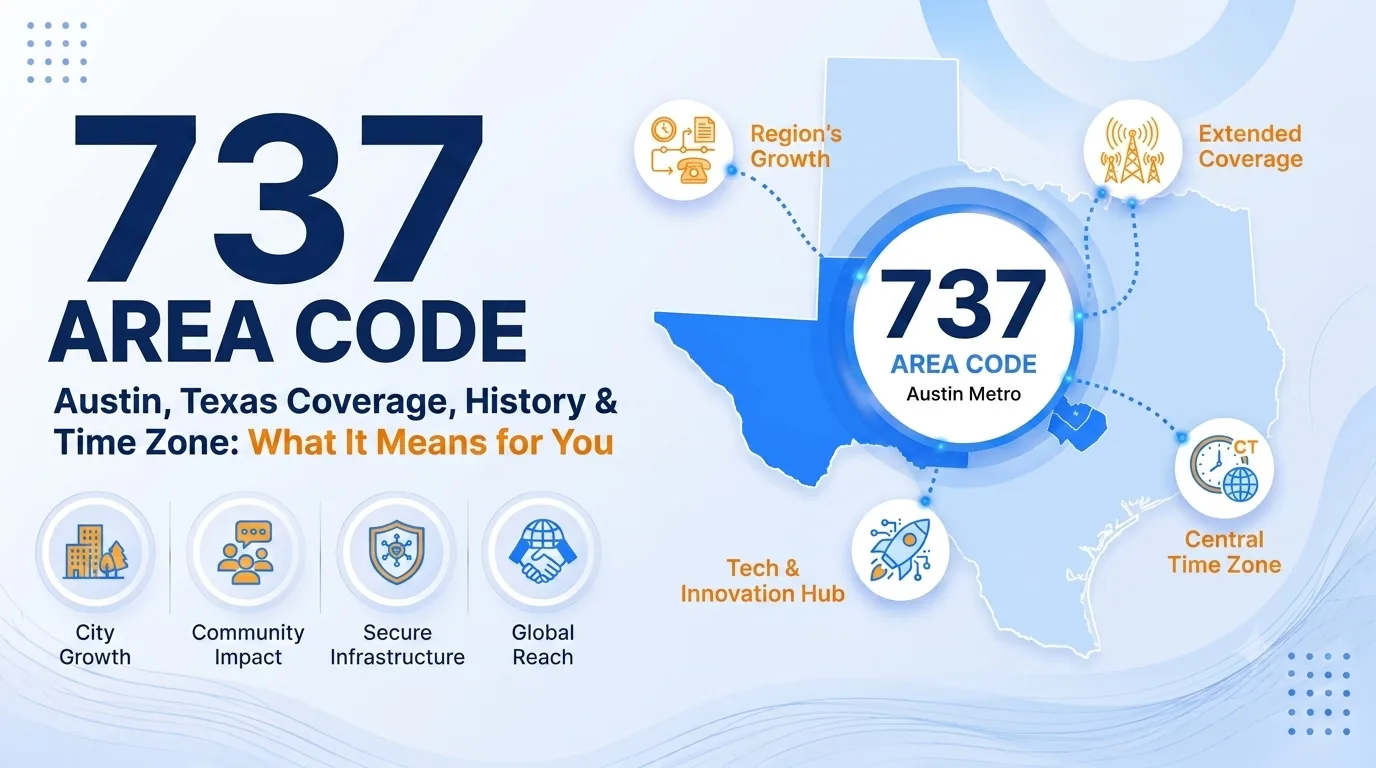
The 737 area code arrived in Austin, Texas in 2013 to keep pace with a booming tech scene and a surge in new phone lines. Anyone opening a business, moving to the city, or just receiving an unfamiliar call needs to know what this prefix actually means.
This guide covers where the 737 area code reaches, why Austin needed it, how ten-digit dialing works, and how to spot a spoofed call. By the end, you will know exactly how to claim a 737 phone number of your own and use it with confidence.
- The 737 area code overlays 512 across Austin and the surrounding Texas Hill Country, so both codes now share the same territory.
- Ten-digit dialing is mandatory everywhere the 737 area code operates, even for calls between two local numbers.
- Every community under the 737 area code runs on Central time, matching the rest of the Austin metro.
- A modern cloud phone platform can activate a 737 phone number in minutes, with no Austin office required.
Where the 737 Area Code Reaches in Central Texas
The 737 area code covers Austin and a wide ring of surrounding communities, stretching from the northern suburbs down into the Hill Country.
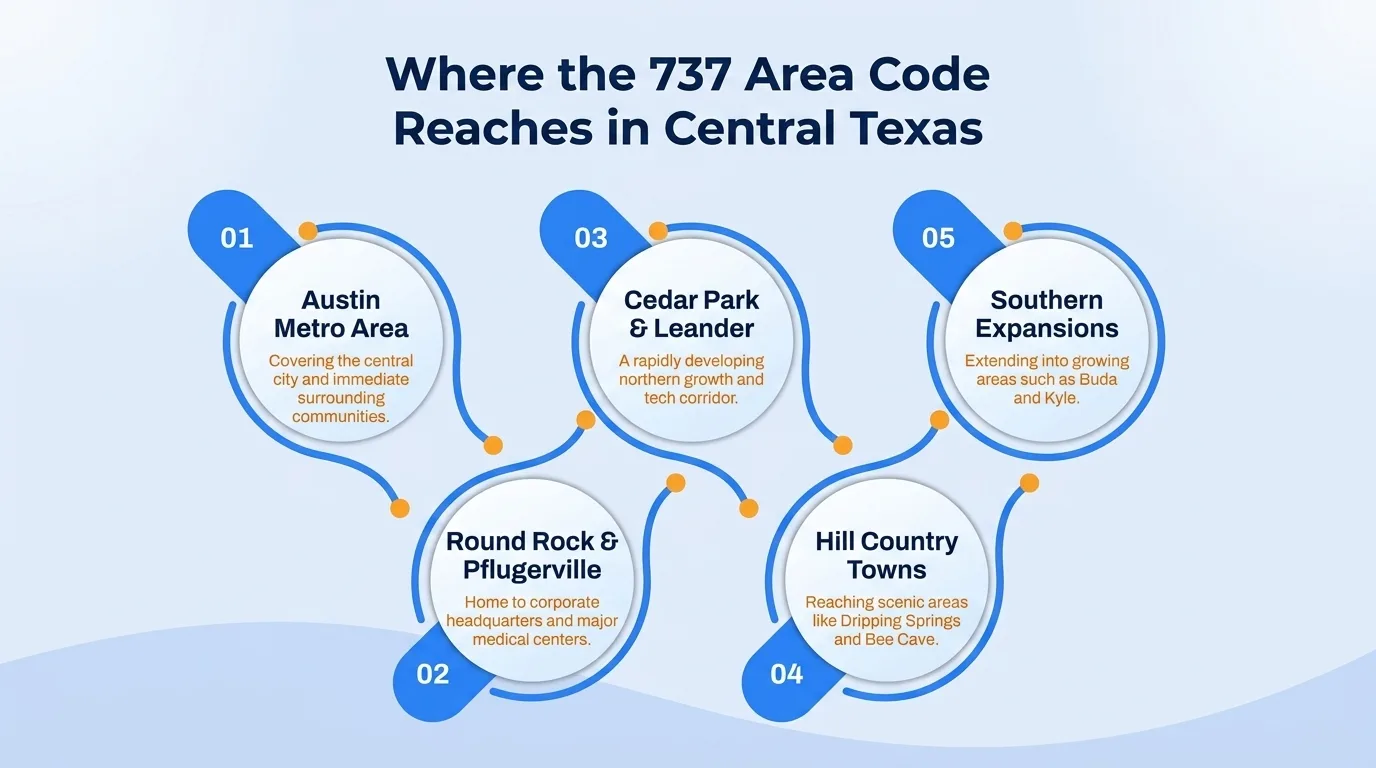
It shares this exact footprint with the older 512 area code, since regulators layered 737 on top rather than redrawing any boundary.
That means a caller in Round Rock and a caller in downtown Austin can both carry a 737 number despite living on opposite sides of the metro.
Austin and the Surrounding Hill Country
Round Rock, Cedar Park, and Pflugerville sit inside the northern half of the coverage area, while Buda and Kyle anchor the southern stretch toward San Marcos. Georgetown and Leander fill out the northwest corridor as the metro keeps expanding. Because the region spans fast-growing suburbs and the original city core alike, this territory now serves one of the fastest-growing populations in the entire state. Local carriers report that demand for new lines here has outpaced almost every other Texas market over the past decade.
Why Austin Needed a Second Area Code
Area code 512 went into service in 1990 after splitting away from the old 210 numbering plan that once covered much of south-central Texas.
Austin's population and business base grew far faster than regulators expected through the 1990s and 2000s, and the tech boom only accelerated that demand.
By the early 2010s, planners recognized that a straight geographic split would force thousands of existing residents to change their numbers, a costly and disruptive process for households and businesses alike.
An Overlay Instead of Another Split
Regulators chose an overlay instead, activating the 737 area code in November 2013 so new numbers could keep flowing without disturbing a single existing 512 customer. Every number issued since then sits on the exact same map as 512, just assigned to newer lines. That decision is why two neighbors on the same Austin street can carry different area codes despite having lived there for the same number of years.
How to Get a Business Phone Number from Teloz
Teloz gives growing businesses a cloud-based phone system that runs entirely in a browser, so there is no bulky hardware to install or maintain on-site.
A company can claim a local number, route incoming calls through a built-in AI receptionist, and manage every call, text, and voicemail from one connected dashboard.
The platform is built for teams that want a genuine Austin presence without ever leasing office space in the city.
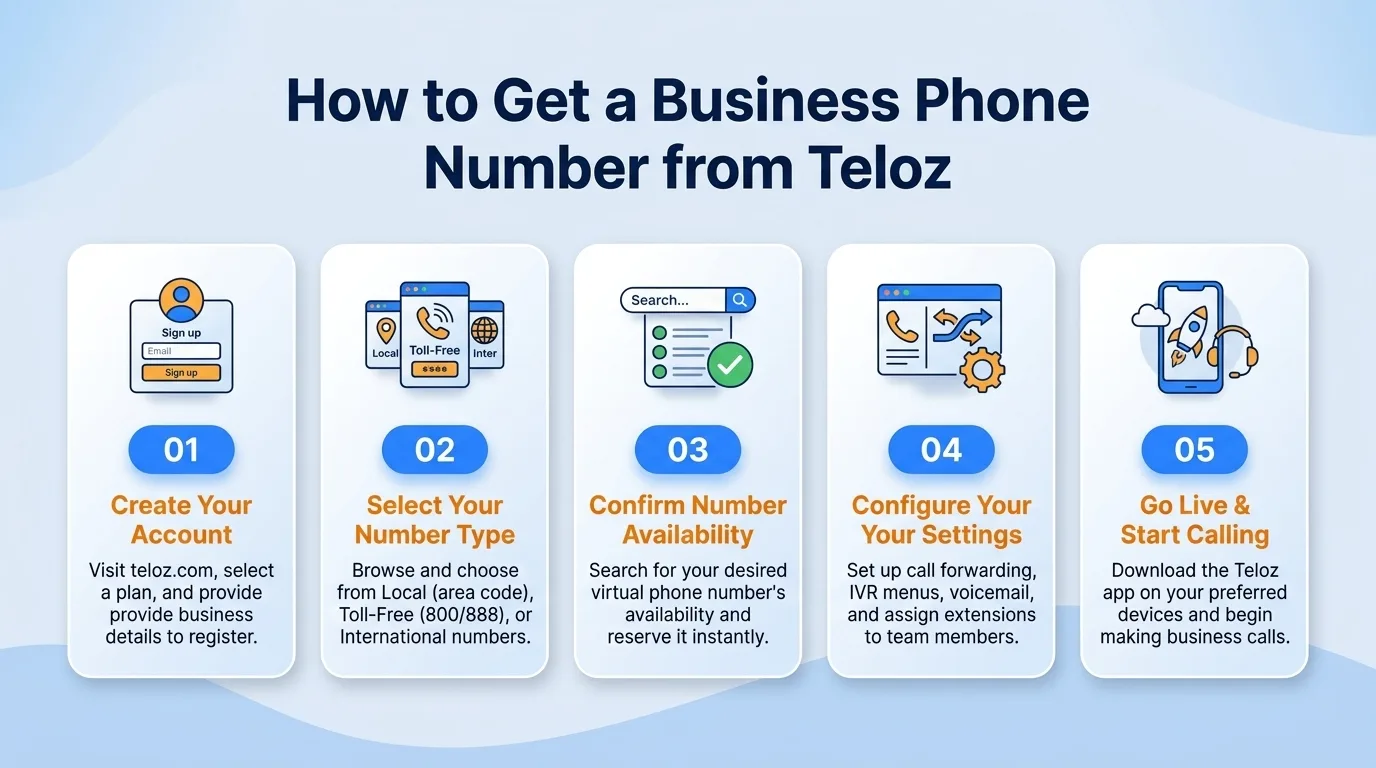
- 1. Visit teloz.com and start a free trial or request a live demo.
- 2. Create your account using your business email address.
- 3. Choose a plan that fits your team's size and expected call volume.
- 4. Select your business number and pick a 737 area code, a toll-free prefix, or a local number elsewhere.
- 5. Set up your team, call routing, and IVR menu right inside the browser dashboard.
- 6. Configure the AI receptionist, voicemail transcription, and SMS settings to match your workflow.
- 7. Start making and receiving calls immediately from the webphone or any connected device.
📞 Wondering if your Austin business sounds as local as it actually is? A matching 737 phone number answers that question the moment a customer sees it on caller ID. 👉 Start Your Free Teloz Trial · 👉 Get Your Business Local Number Today
Ten-Digit Dialing Rules Under the Overlay
Because the 737 area code shares its territory with 512 instead of replacing it, every local call in the region requires all ten digits, including the area code.
Dialing just seven digits, a habit many longtime residents grew up with, no longer connects a call anywhere in the overlay zone. That rule applies whether the person calling holds a 512 number or a 737 number, so nobody gets to skip the extra three digits.
- Always dial the area code plus the seven-digit number, even for next-door neighbors
- Save new contacts with the full ten digits from the start
- Update saved speed-dial entries that only stored seven digits
- Expect the same ten-digit format on landlines, mobiles, and VoIP lines alike
Spotting a Scam Call From a 737 Number
The 737 area code itself carries no risk on its own; real Austin residents, hospitals, and small businesses use it every day.
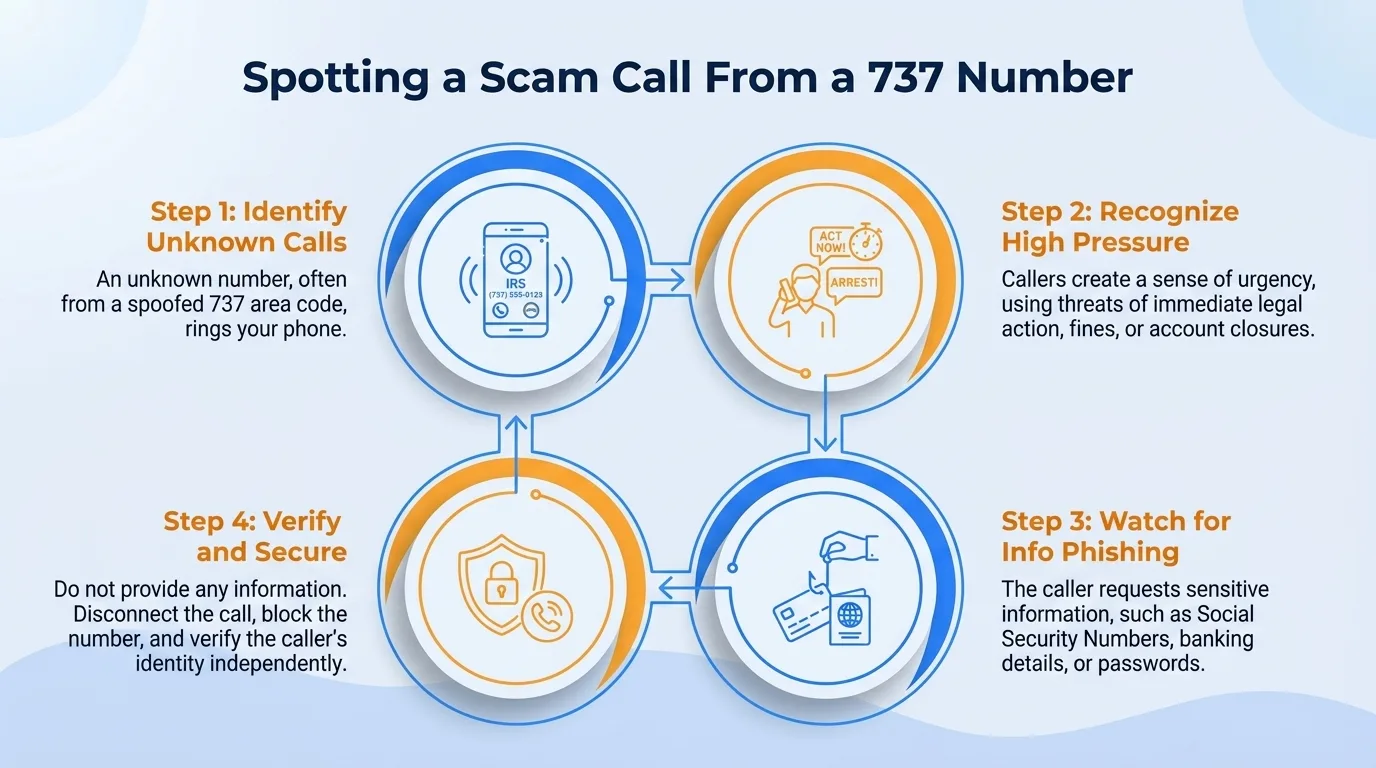
Scammers know that a local-looking prefix earns instant trust, which is exactly why they spoof caller ID displays to make fraudulent calls seem like they are coming from a neighbor.
The digits on a screen never tell the whole story, and the caller's behavior is what actually matters.
Common Red Flags to Watch For
According to the Federal Communications Commission, scammers routinely fake caller ID information to disguise where a call truly originates, so an area code alone can never confirm a caller's identity. Watch for urgent demands to pay a bill immediately, requests for gift cards or wire transfers, or callers claiming to represent a utility company while pushing for personal details. Hang up and dial the official number listed on a bill or website instead of trusting whatever showed up on the screen. A legitimate business will never pressure someone into paying instantly or sharing a one-time verification code over the phone.
The Time Zone Behind Every 737 Call
Every community inside the 737 area code operates on Central time, observing daylight saving right alongside the rest of Austin and the greater Hill Country.
That shared clock keeps scheduling simple for businesses, since a call placed at 9 a.m. in Round Rock lands at 9 a.m. in downtown Austin without any conversion.
Companies coordinating appointments, deliveries, or support calls across the metro never need to double-check a client's local hour before dialing.
“This is not a random string of digits — it is Austin's second calling identity, layered onto 512 to keep the tech capital's numbers flowing.”
Why a Local Number Builds Trust in Austin
Businesses serving Austin, Round Rock, or the wider Hill Country gain something real by matching their number to a prefix locals already recognize.
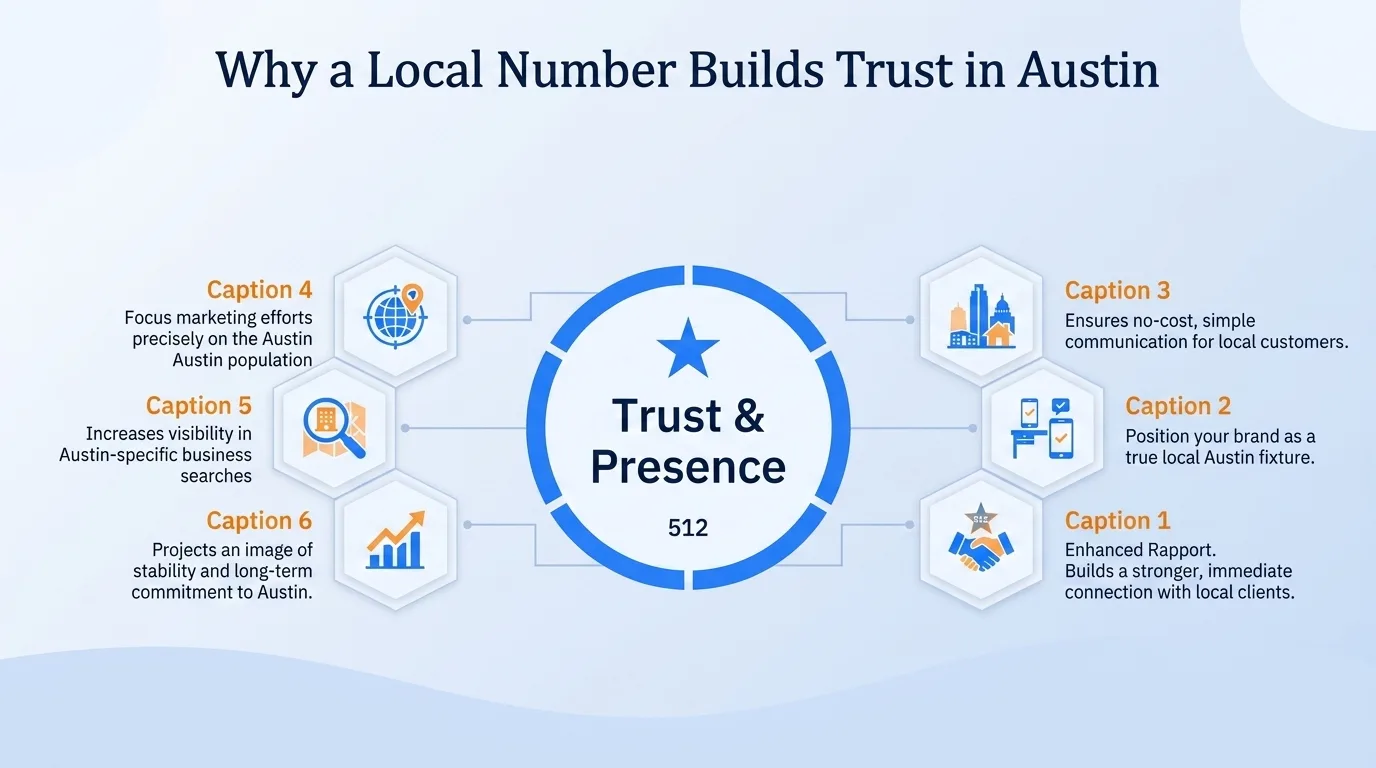
Callers answer faster, trust faster, and refer their neighbors faster once they see this area code on the screen instead of an unfamiliar toll-free line.
A 737 phone number tells a customer something simple right away: this business understands Austin and is easy to reach, whether the call comes from a downtown office or a Hill Country storefront.
A Local Number Versus a Distant Toll-Free Line
A toll-free number still makes sense for national brands chasing recognition everywhere at once. A local number instead tells a caller in Cedar Park or Buda that the company on the other end is part of their own community, not a distant call center somewhere else. For local service businesses especially, that distinction often decides whether the phone gets answered at all, and a cloud-based platform makes claiming that identity simple even for a team that has never set foot in Texas's Coastal Bend or anywhere else in the state.
Conclusion
The 737 area code is more than a random string of digits; it is Austin's second calling identity, layered onto 512 to keep pace with one of the fastest-growing metros in the country.
It went live in 2013 as an overlay rather than a split, which is why longtime residents kept their original numbers while newcomers received a 737 number instead.
Every community here still shares Central time with the rest of the Austin metro, keeping scheduling simple across the whole region.
Understanding how the area code 737 system works helps residents and business owners alike recognize who is genuinely calling from home.
Austin businesses that want to be taken seriously locally should treat their 737 area code number as more than an afterthought.
A matching 737 phone number signals real roots in the community, while a smart cloud platform behind it keeps every call, text, and voicemail organized in one place.
Claiming that number and building that trust with the right provider takes only a few minutes, from signup to your very first answered call.
Whether you are protecting yourself from a spoofed call or launching a new business line, the next step in Austin starts with the right number.
📍 Ready to sound like a true Austin neighbor on every call? Claim a 737 area code number today and let a cloud platform route it straight to your team. 👉 Get Your 737 Number Now · 👉 Start Your Free Trial


