Giới thiệu
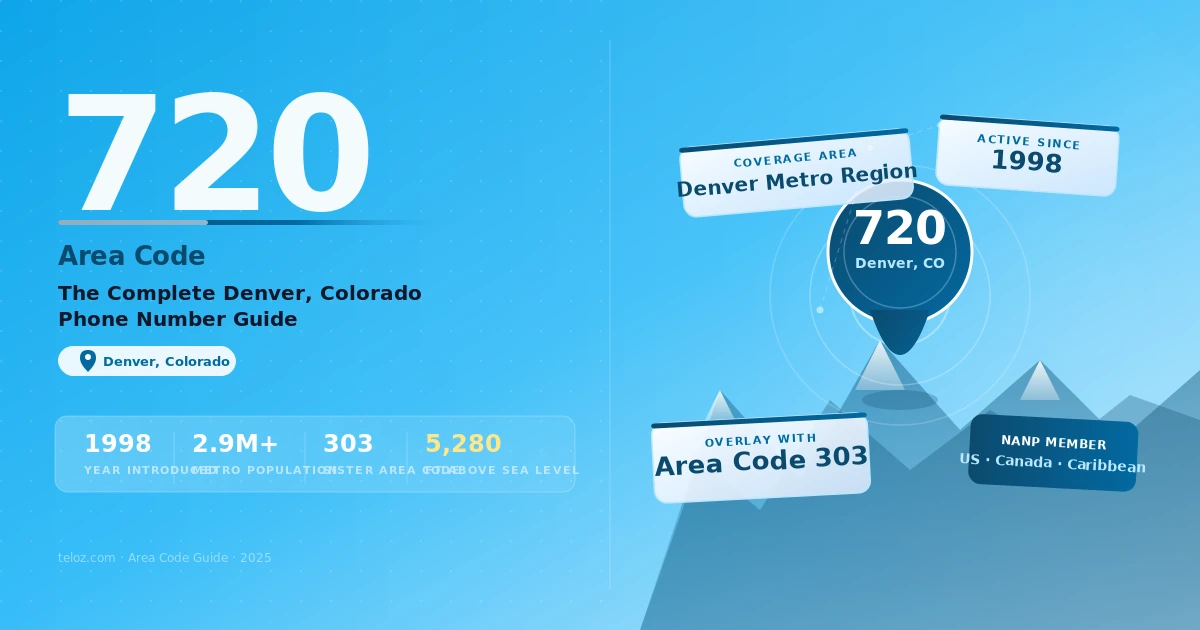
Bối cảnh viễn thông của Colorado đã thay đổi vĩnh viễn vào ngày 1 tháng 9 năm 1998 - ngày mã vùng 720 ra đời.
Mã vùng 303 ban đầu của Denver đã phục vụ toàn bang kể từ năm 1947, nhưng sự gia tăng dân số bùng nổ và việc sử dụng rộng rãi điện thoại di động đã đẩy hệ thống đánh số đến giới hạn của nó.
Thay vì chia cắt khu vực về mặt địa lý và buộc hàng nghìn cư dân và doanh nghiệp phải thay đổi số lượng, các cơ quan quản lý đã đưa ra 720 như một lớp phủ - một quyết định định hình cách Colorado giao tiếp trong nhiều thập kỷ tới.
Ngày nay, mã vùng 720 có diện tích tương tự như mã 303, trải dài từ Denver, Aurora, Boulder, Lakewood, Littleton, Englewood và hàng chục vùng ngoại ô.
Cho dù bạn là người gốc Colorado hay một doanh nghiệp thiết lập sự hiện diện tại địa phương, việc hiểu rõ mã vùng Denver này sẽ giúp bạn đưa ra các quyết định liên lạc thông minh hơn.
- 720 ra mắt ngày 1 tháng 9 năm 1998 dưới dạng lớp phủ cho mã vùng 303 ban đầu của Denver.
- Bao gồm tàu điện ngầm Denver-Boulder: Denver, Aurora, Boulder, Lakewood và hàng chục vùng ngoại ô.
- Quay số 10 chữ số là bắt buộc trên vùng phủ sóng 303/720/983.
- Con số 720 có độ tin cậy ở địa phương tương tự như con số 303 — mạnh mẽ về tỷ lệ trả lời và độ tin cậy thương hiệu.
- Nhận số ảo 720 trong vài phút thông qua nền tảng VoIP/đám mây, ngay cả khi không có văn phòng ở Denver.
Mã vùng 720 là gì và nó bao gồm những thành phố nào?
Mã vùng 720 là một trong ba mã vùng đang hoạt động phục vụ tàu điện ngầm Denver-Boulder ở Colorado, cùng với 303 (bản gốc, 1947) và 983 (thêm 2022).
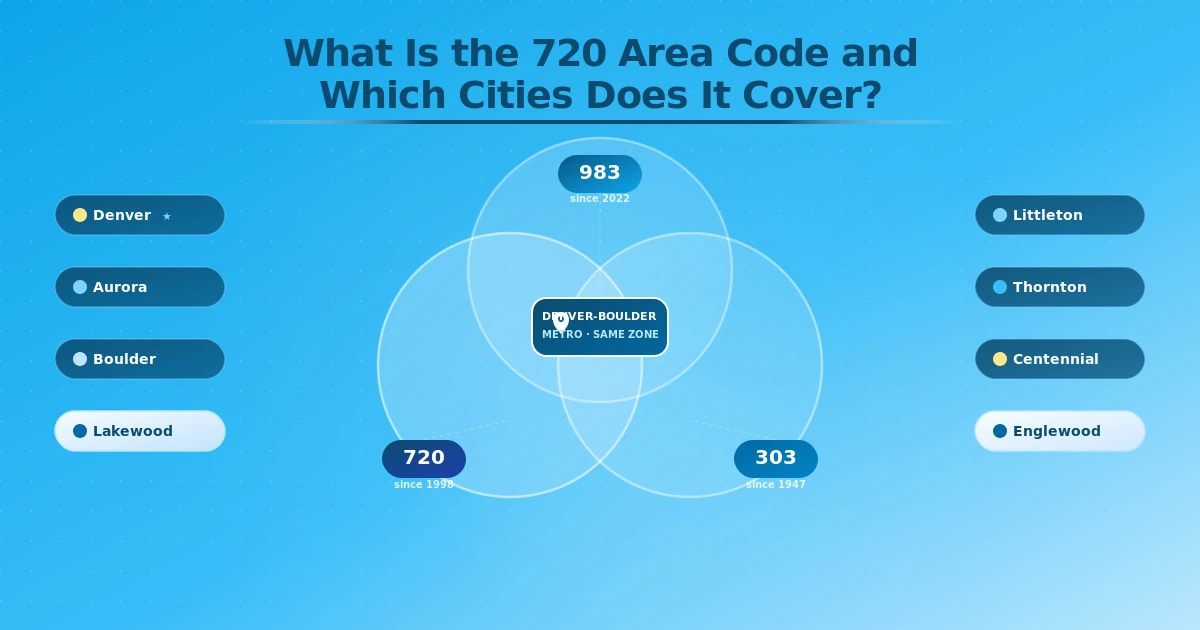
Cả ba đều hoạt động như các lớp phủ bao phủ cùng một lãnh thổ địa lý - mã mà người đăng ký nhận được tùy thuộc vào số lượng có sẵn tại nơi chỉ định chứ không phải vị trí.
Các thành phố và cộng đồng được phục vụ bởi mã vùng 720 bao gồm:
- Denver - thủ đô và thành phố lớn nhất của Colorado
- Aurora - một trong những vùng ngoại ô phát triển nhanh nhất của bang
- Boulder - ngôi nhà của Đại học Colorado và hành lang công nghệ phát triển mạnh
- Lakewood, Littleton và Englewood - vùng ngoại ô lớn phía tây nam Denver
- Westminster, Thornton và Centennial — những trung tâm dân cư và thương mại quan trọng
- Broomfield, Castle Rock và Longmont — các cộng đồng ngoài vòng ngoài đang mở rộng nhanh chóng
Vì 720, 303 và 983 trùng nhau trên cùng một vùng nên việc quay số 10 chữ số là bắt buộc đối với tất cả các cuộc gọi nội hạt — mã vùng đầy đủ cộng với số có bảy chữ số. Đây là thông lệ tiêu chuẩn của cư dân Denver kể từ năm 1998.
Lịch sử mã vùng 720: Giải pháp lớp phủ của Colorado
Trước năm 1998, một mã vùng duy nhất - 303 - bao phủ toàn bộ Colorado. Hai lực lượng xung đột vào giữa những năm 1990: dân số tăng nhanh ở khu đô thị Denver và việc sử dụng rộng rãi điện thoại di động, mỗi lực lượng tiêu thụ các khối số với tốc độ chưa từng thấy.
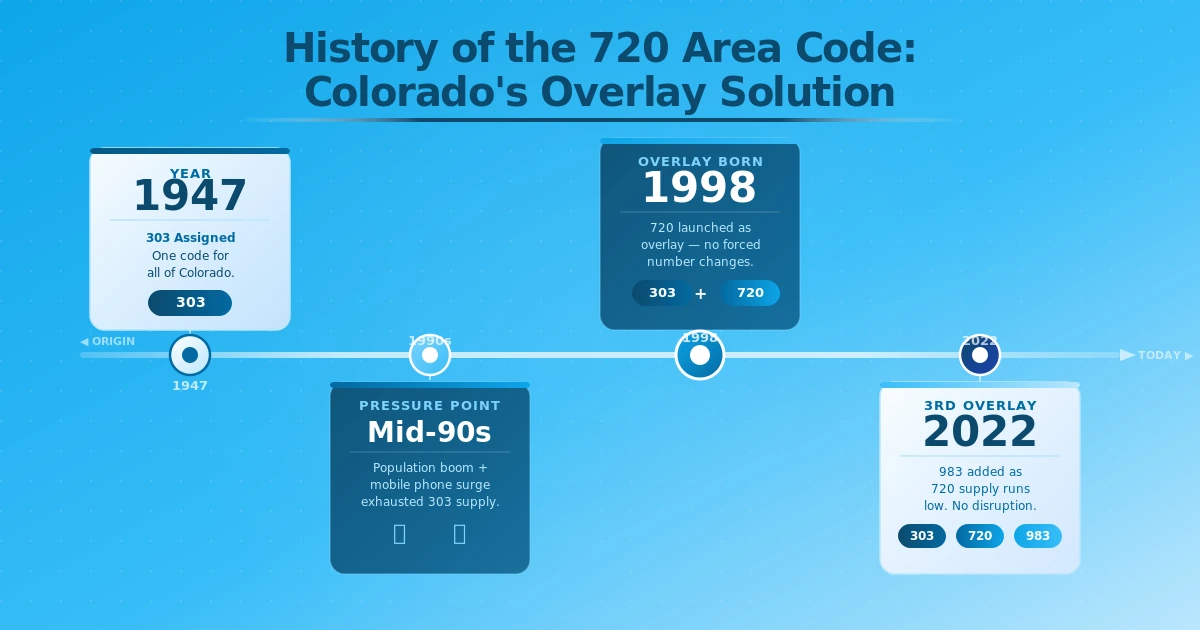
Giải pháp được FCC phê duyệt là một lớp phủ. Thay vì phân chia khu vực về mặt địa lý (điều này có thể buộc một nửa Denver phải thay đổi số), các cơ quan quản lý đã chỉ định mã vùng 720 mới để bao trùm cùng một lãnh thổ.
303 người đăng ký hiện tại vẫn giữ số của họ. Thuê bao mới được cấp 720 số.
Sự đánh đổi duy nhất là quay số 10 chữ số bắt buộc cho các cuộc gọi nội hạt - một sự bất tiện nhỏ so với sự phân chia hoàn toàn về mặt địa lý.
Đến năm 2022, nguồn cung 720 sắp cạn kiệt, dẫn đến việc đưa ra lớp phủ thứ ba: mã vùng 983. Cách tiếp cận của Colorado luôn ưu tiên tính liên tục — không bắt buộc thay đổi số lượng, không phân mảnh địa lý.
Mô hình tư duy tiến bộ này hiện được coi là phương pháp thực hành tốt nhất trong chính sách đánh số đô thị.
Ý nghĩa rộng hơn: khu vực Denver từng nằm trong một mã vùng 303 duy nhất giờ đây yêu cầu ba mã chồng chéo. Câu chuyện tăng trưởng đó không thể tách rời với lịch sử của mã vùng 720.
Lợi ích chính của Mã vùng 720 dành cho doanh nghiệp Denver
Số điện thoại 720 Colorado không chỉ thực hiện các cuộc gọi định tuyến - nó báo hiệu sự thuộc về địa phương. Khi người tiêu dùng ở Denver nhìn thấy ID người gọi 720, họ sẽ nhận ra ngay lập tức. Sự quen thuộc đó có giá trị thương mại thực sự.
Tỷ lệ trả lời cao hơn
Các cuộc gọi từ mã vùng địa phương có nhiều khả năng được trả lời hơn so với các số ngoài tiểu bang hoặc số điện thoại miễn phí. Con số 720 định vị doanh nghiệp của bạn như một người hàng xóm chứ không phải một người xa lạ.
Nhận diện thương hiệu địa phương mạnh mẽ hơn
Cho dù bạn điều hành một cơ sở hành nghề pháp lý ở LoDo, một phòng khám chăm sóc sức khỏe ở Aurora hay một công ty SaaS ở Boulder, con số 720 sẽ củng cố cam kết của bạn với thị trường Denver. Nó báo hiệu sự lâu dài.
Gọi nội hạt tiết kiệm chi phí
Các cuộc gọi trong vùng phủ sóng 720/303 được tính phí theo cước phí địa phương, khiến cho các cuộc gọi đi với số lượng lớn trở nên hợp lý hơn đối với các hoạt động có trụ sở tại Denver.
Tính linh hoạt của số ảo
Bạn không cần một văn phòng thực tế ở Denver để lưu giữ số điện thoại ảo 720. Hệ thống điện thoại dựa trên đám mây cho phép các doanh nghiệp ở bất cứ đâu cung cấp số 720 và định tuyến cuộc gọi đến bất kỳ thiết bị nào — một tùy chọn mạnh mẽ cho các nhóm ở xa, văn phòng vệ tinh và các công ty mở rộng sang Colorado.
Tính di động của số
Nếu bạn đã mang theo số Denver, hầu hết các nhà cung cấp dịch vụ đều hỗ trợ chuyển số đó sang nền tảng giao tiếp đám mây hoặc VoIP mà không thay đổi các chữ số.
Cách nhận mã số vùng 720 cho doanh nghiệp của bạn
Việc có được số 720 thật đơn giản cho dù bạn cần đường dây vật lý, số di động hay điện thoại doanh nghiệp ảo.
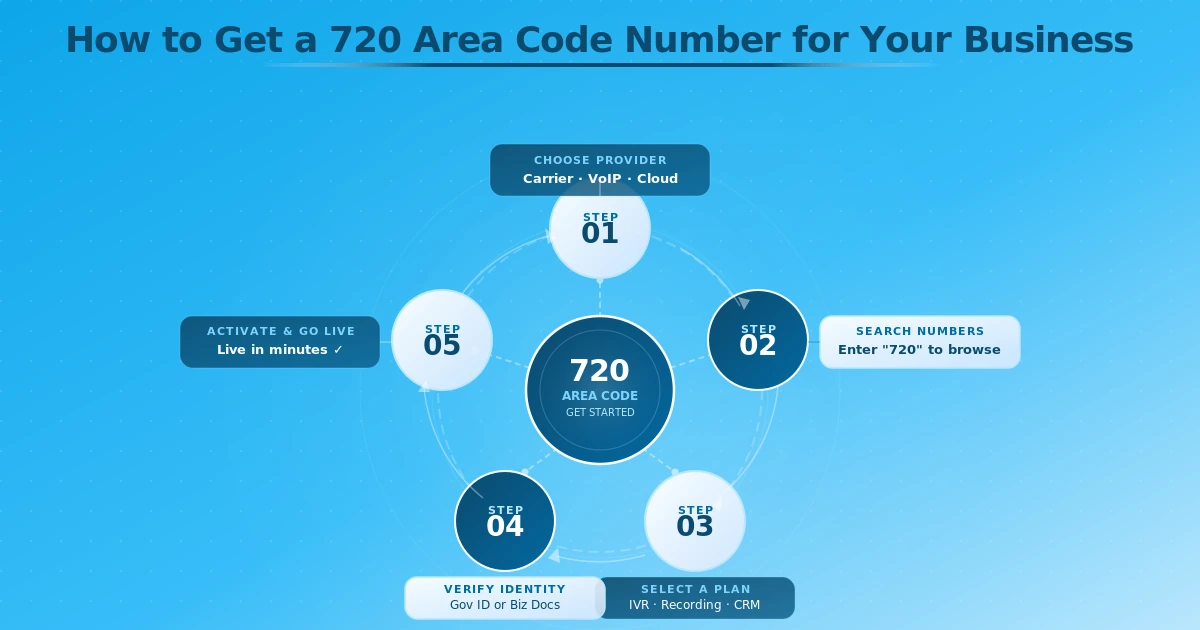
Bước 1 - Chọn loại nhà cung cấp của bạn
Chọn giữa nhà cung cấp dịch vụ truyền thống (AT&T, Verizon, T-Mobile), nhà cung cấp VoIP hoặc nền tảng trung tâm liên lạc đám mây. Đối với các doanh nghiệp cần định tuyến cuộc gọi nâng cao, phân tích hoặc hỗ trợ đa kênh, các giải pháp dựa trên đám mây sẽ cung cấp những khả năng mà đường dây điện thoại tiêu chuẩn không thể sánh được.
Bước 2 - Tìm kiếm các số có sẵn
Hầu hết các nhà cung cấp đều cung cấp công cụ tìm kiếm trực tuyến. Nhập "720" và duyệt qua các kết hợp có sẵn - một số cho phép số tùy chỉnh.
Bước 3 - Chọn một kế hoạch
Các tùy chọn bao gồm từ đường dây cá nhân cơ bản đến gói thoại doanh nghiệp. Để sử dụng cho doanh nghiệp, hãy ưu tiên các gói bao gồm ghi âm cuộc gọi, IVR và tích hợp CRM.
Bước 4 - Xác minh danh tính của bạn
Gửi giấy tờ tùy thân hợp lệ của chính phủ hoặc giấy tờ đăng ký kinh doanh theo yêu cầu của nhà cung cấp mà bạn đã chọn.
Bước 5 - Kích hoạt và định cấu hình
Các số dựa trên đám mây thường hoạt động trong vòng vài phút. Định cấu hình cài đặt định tuyến cuộc gọi, thư thoại và trả lời tự động trước khi phát trực tiếp.
Đối với các doanh nghiệp yêu cầu nhiều hơn số điện thoại — định tuyến do AI điều khiển, phân tích thời gian thực, bảng tường trực tiếp và tương tác đa kênh với khách hàng — nền tảng trung tâm liên hệ đám mây của Teloz hỗ trợ cung cấp số 720 cùng với các công cụ liên lạc cấp doanh nghiệp được xây dựng cho thị trường Denver và hơn thế nữa.
720 so với các mã vùng Colorado khác: Sự khác biệt chính
Colorado hiện sử dụng năm mã vùng hoạt động. Đây là cách so sánh 720:
| Mã vùng | Bảo hiểm | giới thiệu | Lớp phủ? |
|---|---|---|---|
| 303 | Tàu điện ngầm Denver-Boulder | 1947 | Có (với 720 & 983) |
| 720 | Tàu điện ngầm Denver-Boulder | 1998 | Đúng |
| 983 | Tàu điện ngầm Denver-Boulder | 2022 | Đúng |
| 719 | Nam CO (Colorado Springs, Pueblo) | 1982 | KHÔNG |
| 970 | CO miền Bắc và miền Tây (Fort Collins, Grand Junction) | 1995 | KHÔNG |
Điểm khác biệt cốt lõi: 303, 720 và 983 đều phục vụ theo khu vực địa lý giống nhau — mã mà người đăng ký mới nhận được phụ thuộc hoàn toàn vào tình trạng sẵn có. Miền nam và miền tây Colorado sử dụng mã độc lập (719, 970) vì mật độ dân số ở đó chưa hết các khối số sẵn có.
Đối với doanh nghiệp: số 303 và số 720 có độ tin cậy ngang nhau ở địa phương ở Denver. Cả hai đều không mới hơn, ít hợp pháp hơn hoặc ít đáng tin cậy hơn. Cả hai đều được công nhận là mã điện thoại chính hãng của tàu điện ngầm Denver. Để giảm bớt những cuộc gọi không mong muốn, bạn có thể đăng ký số của mình tại donotcall.gov.
“Đối với các doanh nghiệp, số 720 mang lại uy tín tại địa phương, tỷ lệ trả lời cao hơn và khả năng tương thích liền mạch với các công cụ liên lạc đám mây hiện đại.”
Nhận thức về Lừa đảo: Bảo vệ Bạn khỏi Lừa đảo Mã Vùng 720
Vì 720 là mã vùng Denver địa phương được công nhận nên những kẻ lừa đảo sử dụng nó để khiến các cuộc gọi giả mạo có vẻ hợp pháp. Việc giả mạo ID người gọi cho phép mọi người hiển thị bất kỳ số nào — kể cả 720 — bất kể nguồn gốc thực sự của cuộc gọi.
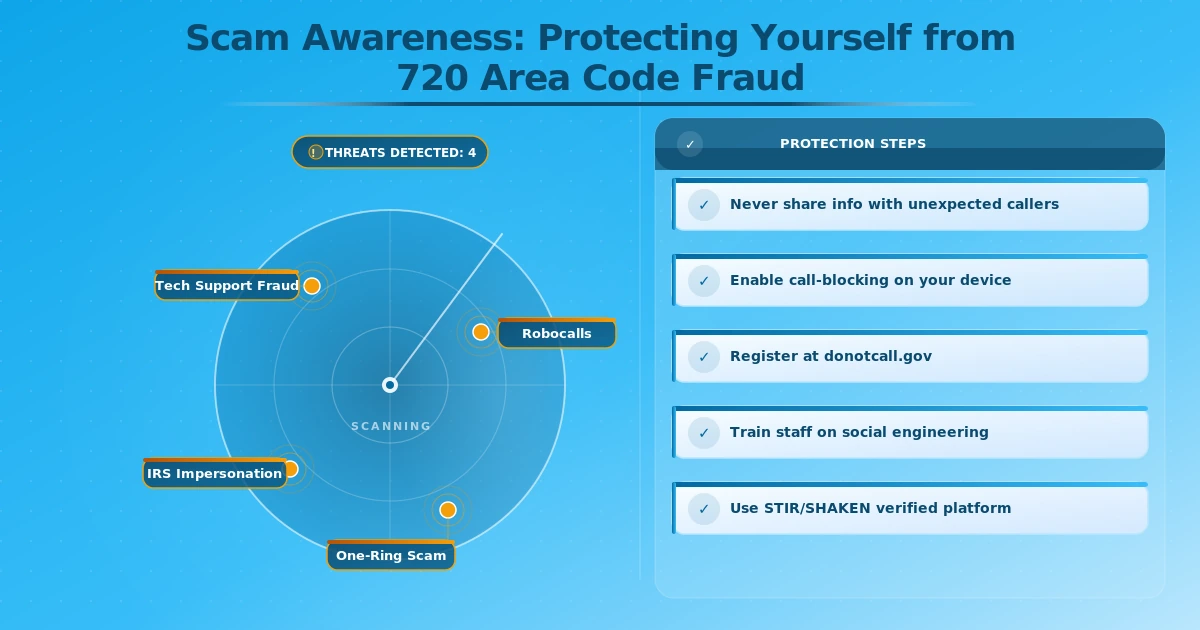
Các loại lừa đảo 720 phổ biến
- Cuộc gọi tự động - tin nhắn tự động yêu cầu trúng thưởng, đe dọa nợ nần hoặc ngắt kết nối tiện ích
- Mạo danh IRS - yêu cầu thuế giả hoặc thông báo đình chỉ An sinh xã hội
- Gian lận hỗ trợ kỹ thuật — người gọi cho rằng thiết bị của bạn bị xâm nhập và đề nghị "trợ giúp" phải trả phí
- Lừa đảo một lần — các cuộc gọi một lần được thiết kế để nhắc gọi lại tới các đường dây cước cao cấp
Các bước bảo vệ thực tế
- Không bao giờ chia sẻ thông tin tài chính hoặc thông tin cá nhân với những người gọi đến không mong muốn — gọi lại cho các tổ chức bằng số đã được xác minh
- Bật tính năng chặn cuộc gọi thông qua cài đặt nhà cung cấp dịch vụ hoặc thiết bị của bạn
- Đăng ký số của bạn trên sổ đăng ký Không gọi quốc gia
- Đào tạo nhân viên làm việc trực tiếp với khách hàng để nhận biết các nỗ lực lừa đảo qua mạng xã hội
- Sử dụng một nền tảng điện thoại doanh nghiệp với tính năng phát hiện thư rác tích hợp và xác minh STIR/SHAKEN
Khung giảm thiểu cuộc gọi tự động của FCC (STIR/SHAKEN) đang giảm thiểu hành vi giả mạo ở cấp độ nhà mạng nhưng nhận thức cá nhân vẫn là biện pháp phòng vệ mạnh nhất.
Phần kết luận
Mã vùng 720 không chỉ là tiền tố quay số - nó là dấu hiệu thuộc về một trong những khu vực đô thị phát triển nhanh nhất nước Mỹ.
Được giới thiệu vào năm 1998 để giải quyết cuộc khủng hoảng đánh số ở Colorado mà không làm gián đoạn cơ cấu liên lạc của khu vực, mã vùng 720 đã chứng tỏ sức mạnh bền bỉ trong gần ba thập kỷ qua.
Đối với các doanh nghiệp, số 720 mang lại uy tín tại địa phương, tỷ lệ trả lời cao hơn và khả năng tương thích liền mạch với các công cụ liên lạc đám mây hiện đại. Đối với người dân, đó đơn giản là cuộc sống hàng ngày ở Denver.
Khi dân số Colorado tăng lên và cơ sở hạ tầng công nghệ hoàn thiện, mã vùng 720 sẽ vẫn là trung tâm trong cách khu vực kết nối — và cách các doanh nghiệp giành được sự tin tưởng trong đó.
Xem cách Teloz hỗ trợ các doanh nghiệp Colorado bằng các công cụ giao tiếp cấp doanh nghiệp tại Teloz.com.


