Introduction
The 716 area code identifies calls across Buffalo and the rest of western New York, and it has covered this corner of the state since telephone numbering began there in 1947.
Anyone doing business or living near the Niagara Frontier has almost certainly dialed or received a call under this prefix.
This guide explains where the 716 area code reaches today, how a 2001 split narrowed its footprint, and how to tell a genuine local call from a spoofed one.
It also covers the practical details: which time zone governs the region and what it actually takes to set up a working business line under this prefix, whether you already live here or are simply setting up a new presence in the market.
Stick around, because the story behind these three digits explains how western New York keeps issuing fresh phone numbers today.
- The 716 area code has served western New York since 1947, though its footprint narrowed once Rochester split off in 2001.
- It now covers Buffalo, Niagara Falls, and the southern tier counties near the Pennsylvania border.
- Every community under this area code operates on Eastern time, same as the rest of New York State.
- Knowing what area code is 716 helps residents and business owners recognize genuine western New York calls.
Buffalo's Corner of Western New York
The 716 area code covers Buffalo, Niagara Falls, and the surrounding Erie and Niagara county communities, stretching south into the state's rural southern tier near the Pennsylvania line.
It no longer reaches Rochester, which carved out its own numbering plan in 2001. That narrower footprint still makes this one of the more industrially significant area codes in the entire state, anchored by manufacturing, healthcare, and higher education.
Communities Answering to This Prefix
- Buffalo and Cheektowaga, anchoring the region's largest metro area
- Niagara Falls, home to one of the country's best-known natural landmarks
- Jamestown and Olean, covering the rural southern tier near Pennsylvania
- Lockport and Tonawanda, filling out the Niagara Frontier's inner suburbs
Because the 716 area code stretches from the Niagara Frontier down through the rural southern tier instead of sitting in one compact metro, it ends up serving a mix of industrial cities, tourist destinations, and small farming communities all under the same three digits. A caller from Niagara Falls and a caller from Olean share the exact same 716 area code despite living nearly two hours apart by car. That geographic spread is part of why understanding this area code's boundaries matters more here than it might in a smaller, denser region.
The 2001 Split That Gave Rochester Its Own Code
Area code 716 originally covered all of western New York, including Buffalo, Rochester, and everything in between, ever since the state's earliest numbering plan took shape in 1947.
Rochester's optics and imaging industry grew fast enough by the late 1990s that the shared numbering pool started running short on fresh combinations. Splitting the region meant the 716 area code could keep serving Buffalo comfortably for decades to come.
Why Regulators Chose a Split Over an Overlay
Regulators split the region in 2001 rather than adding an overlay, giving Rochester its own dedicated area code, 585, while Buffalo and the surrounding counties kept 716. That decision meant Rochester businesses had to update every printed number, sign, and system on file, while Buffalo-area customers kept their existing digits untouched. The two regions have operated as fully separate numbering plans ever since, each with its own capacity to keep issuing fresh numbers for decades to come.
The Time Zone Behind Every Buffalo-Area Call
Every community inside the 716 area code operates on Eastern time, observing daylight saving right alongside New York City and the rest of the state.
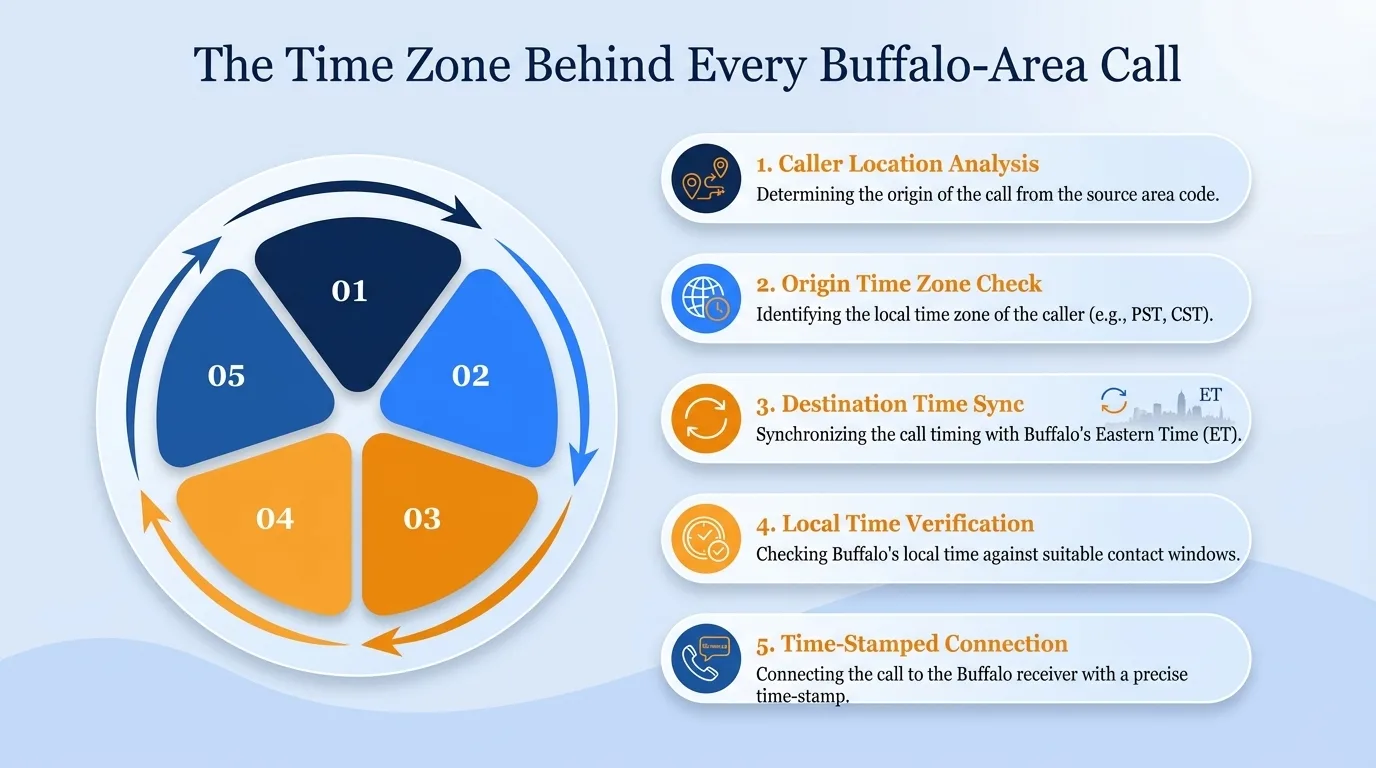
That shared time zone keeps scheduling simple for businesses, since a call placed at 9 a.m. in Buffalo lands at 9 a.m. in Jamestown without any conversion.
Companies coordinating deliveries, appointments, or support calls across western New York never have to double-check a client's local hour.
📞 Wondering if your Buffalo-area business sounds as local as it actually is? A matching local number answers that question the moment a customer sees it on caller ID. 👉 Start Your Free Teloz Trial · 👉 Get Your Business Local Number Today
How to Get a Business Phone Number from Teloz
Teloz gives growing businesses a cloud-based phone system that runs entirely in the browser, with no bulky hardware to install or maintain on-site.
A company can claim a 716 area code number, route incoming calls through a built-in AI receptionist, and manage every text and voice conversation from one connected dashboard.
Teloz is built for teams that want a genuine western New York presence without ever opening a physical office in the state, whether that team sits across town or across the country.
- 1. Visit the website and start a free trial or request a live demo.
- 2. Create your account using your business email address.
- 3. Choose a plan that fits your team's size and expected call volume.
- 4. Select your business number and pick a 716 area code, a toll-free prefix, or a local number elsewhere.
- 5. Set up your team, call routing, and IVR menu right inside the browser dashboard.
- 6. Configure the AI receptionist, voicemail transcription, and SMS settings to match your workflow.
- 7. Start making and receiving calls immediately from the webphone or any connected device.
Spotting a Scam Using the 716 Prefix
The 716 area code itself is entirely legitimate, used daily by real Buffalo residents, hospitals, and small businesses across western New York.
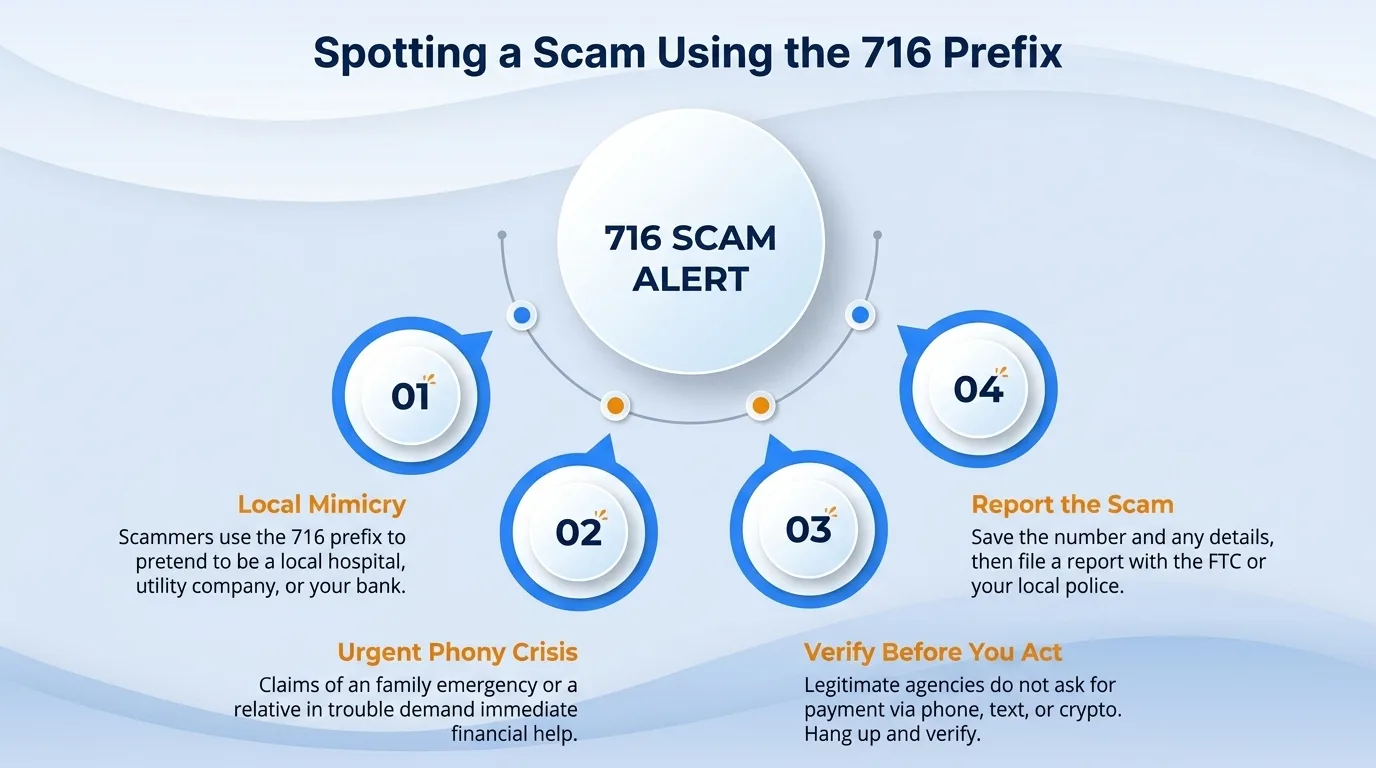
Scammers know that reputation, which is why they spoof 716 caller IDs to make fraudulent calls look local and trustworthy.
The digits on the screen never tell the full story; the behavior of the caller does, and that distinction matters just as much here as it does anywhere else in New York.
Warning Signs Worth Remembering
- Urgent demands to pay a bill immediately or face disconnection
- Requests for gift cards, wire transfers, or cryptocurrency payment
- Callers claiming to be law enforcement or a utility company demanding personal details
- One-ring calls designed to trigger a costly callback
Staying Ahead of Caller ID Spoofing
Treat any unexpected call under area code 716 with the same caution you would use anywhere else in the state. According to the Federal Communications Commission, scammers routinely fake caller ID information to disguise their real location, so the area code alone never confirms who is calling. Hang up and dial the official number on a bill or website instead, especially whenever the request involves money or personal information, and let unfamiliar numbers go to voicemail until you can verify them. A legitimate business calling under this area code will never pressure a customer into paying instantly or sharing a one-time verification code over the phone.
“This is not a random three-digit prefix — it is Buffalo's own calling identity, narrowed since 2001 when Rochester split off to form area code 585.”
The Value of a Genuine 716 Phone Number
Businesses that serve Buffalo, Niagara Falls, or the rest of western New York gain something real by matching their number to an area code locals already recognize.
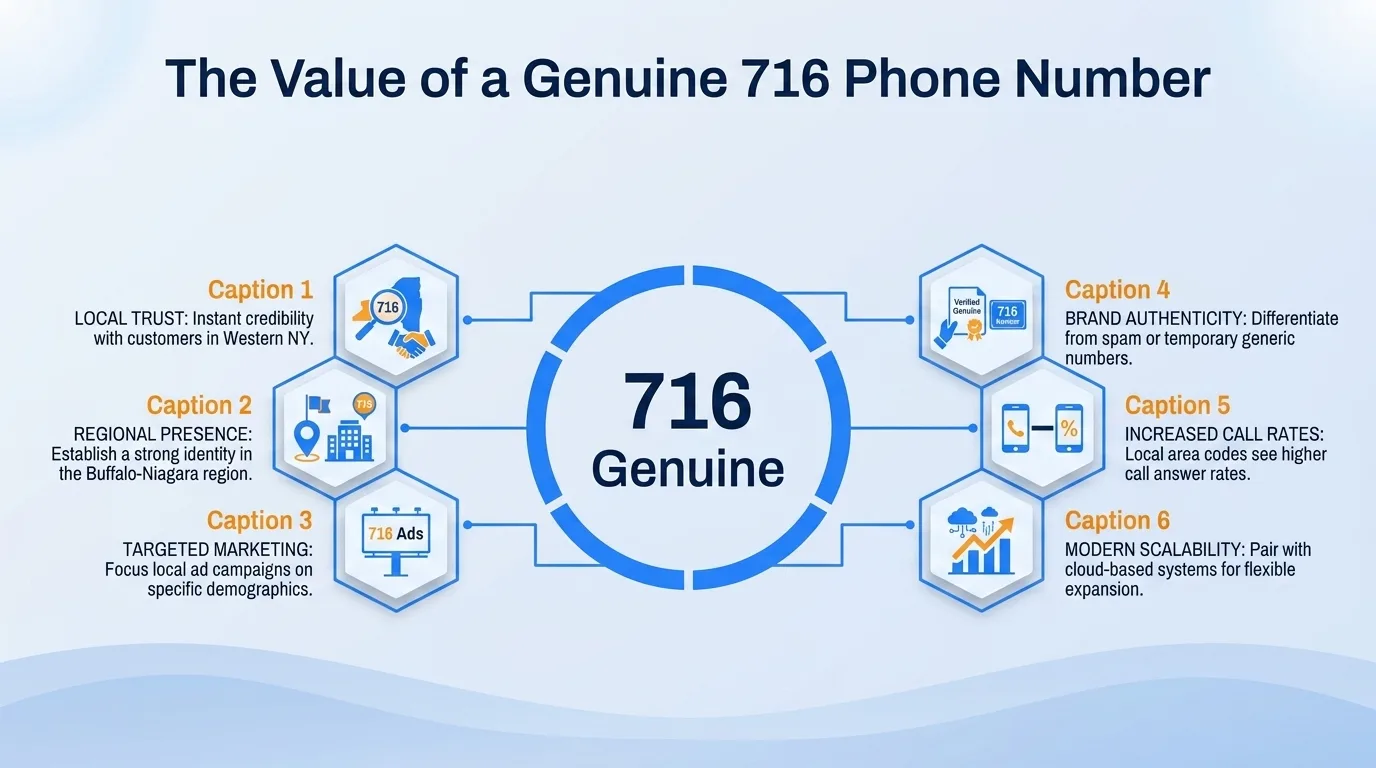
Callers answer faster, trust faster, and refer their neighbors faster once they see this area code on the screen instead of an unfamiliar toll-free line.
That familiar prefix tells a customer here something simple: this business understands western New York and is easy to reach, whether the call comes from downtown Buffalo or the rural southern tier.
Why a Local Prefix Beats a Toll-Free Line
A toll-free number still makes sense for national brands chasing recognition everywhere at once. A 716 phone number instead tells a caller in Jamestown or Lockport that the company on the other end is part of their own community, not a distant call center somewhere else. For local service businesses especially, that distinction often decides whether the phone gets answered at all, and it can quietly shape how quickly a first-time caller becomes a repeat customer. A cloud-based platform makes claiming that identity simple, even for a team that has never set foot in Buffalo.
Conclusion
The 716 area code is more than a random string of digits; it is the shared calling identity of Buffalo and the rest of western New York.
It has served this corner of the state since 1947, narrowed once Rochester split away in 2001 to form its own numbering plan. Every community here still shares Eastern time with the rest of New York, keeping scheduling simple across the whole region.
Understanding what area code is 716 helps residents and business owners alike recognize who is genuinely calling from home.
Western New York businesses that want to be taken seriously locally should treat area code 716 as more than an afterthought.
A matching 716 area code number signals real roots in the community, while a smart platform behind it keeps every call, text, and voicemail organized in one place.
Claiming that 716 phone number and building that trust takes only a few minutes, from signup to your very first answered call.
Whether you are protecting yourself from a spoofed call or launching a new business line, the next step in Buffalo starts with the right number.
📍 Ready to give your Buffalo-area business a number locals instantly recognize?
A verified 716 area code number paired with call authentication keeps your caller ID clean. 👉 Start Your Free Teloz Trial · 👉 Claim Your 716 Number Today


