Introduction
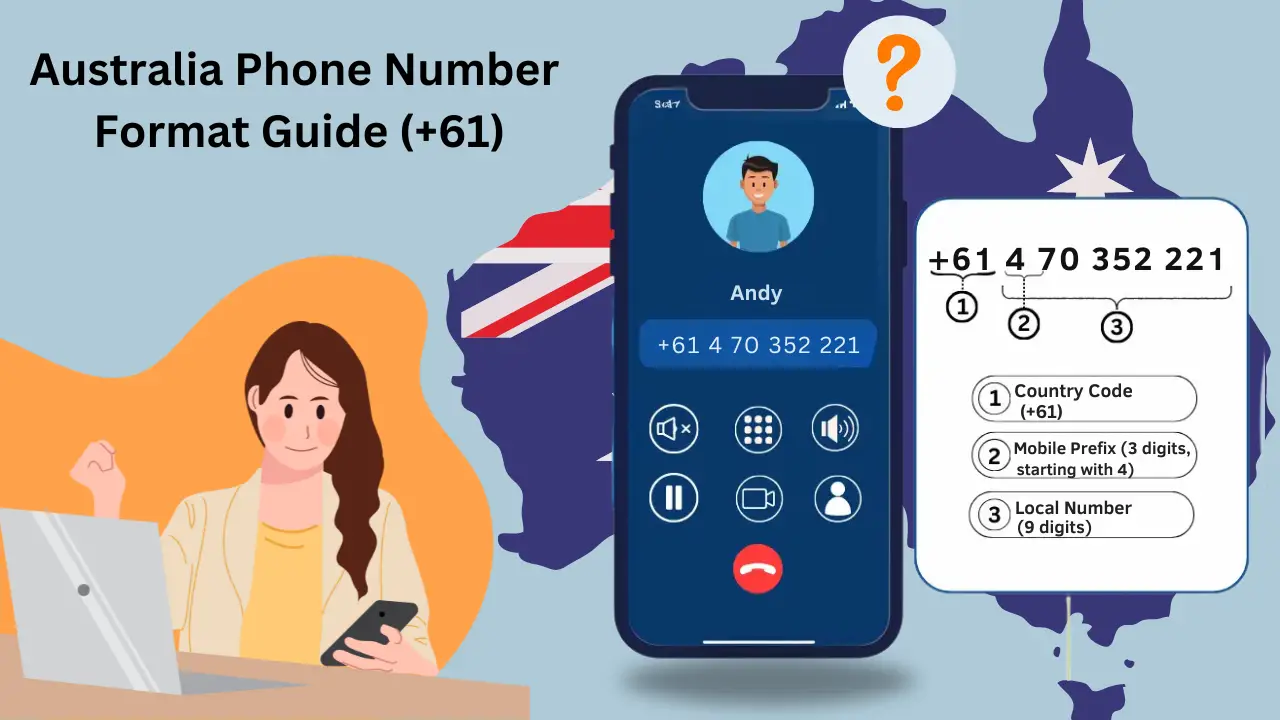
Getting the Australian phone number format correct is crucial for smooth communication, whether you're growing your business or staying connected with friends and family. Understanding the structure of Australian numbers ensures your calls connect properly, especially when dialing internationally, with Teloz facilitating seamless connections.
This guide covers everything you need to know, from dialing +61 to avoiding common dialing mistakes. By the end, you'll have all the knowledge to navigate Australia's telephone network and make international calls effortlessly, making you a pro at dialing Australian numbers.
- Structure: Australian numbers include Country Code (+61), Area Code.
- Mobile vs. Landline: Mobile numbers are distinct because they always start with 04.
- Dialing Rules: IInternational calls drop the leading zero, simplifying dialing with international calling apps.
- Modern Tech: VoIP and cloud providers like Acepeak transform number usage.
What is the Australia Phone Number Format and How Does it Work?
The Australian telephone number format is logical and straightforward, covering landlines and mobile devices. Here's how the components are structured and how they work together.
Explanation of the Phone Number Structure
An Australian phone number is made of three distinct parts:
| Component | Description | Example |
|---|---|---|
| Country Code | The prefix used to direct calls to Australia from overseas. | +61 |
| Area Code | A single digit (internationally) or two digits (domestically) for a specific region. | 2 (NSW) |
| Local Number | The unique 8-digit number for the subscriber. | 1234 5678 |
How Different Components Fit Together
To make a call work, you have to arrange these numbers correctly.
International Calls to Australia:
If you are calling from the USA or Europe, follow this formula:
- Dial your International Exit Code (e.g., 011 for USA, 00 for UK).
- Add the Country Code (+61).
- Crucial Step: Drop the leading '0' from the area code or mobile number.
- Dial the remaining digits.
- Example: To call Sydney (02) from the US: 011 61 2 1234 5678.
Domestic Calls within Australia:
- Local: Just dial the 8-digit local number if you are in the same area.
- Interstate: Dial the Trunk Code (0) + Area Code + Local Number.
- Example: 02 1234 5678.
Importance of Each Component
Think of it like a mailing address. The Country Code is the country, the Area Code is the city, and the Local Number is the street address. If you miss one, the call has nowhere to go.
Historical Context and Evolution of Australian Phone Numbers
The phone system in Australia didn't always look like this. It has evolved alongside technology, overseen by the Australian Communications and Media Authority (ACMA).
Evolution of the Phone Number System in Australia
In the early 1900s, phone numbers were short and manually connected by operators. As Australia's population grew in the 1950s, area codes were introduced. The National Numbering Plan from 1994-1998 standardized 8-digit local numbers.
Major Changes Over the Years
- Expansion of Area Codes: In the 90s, area codes were consolidated into single digits (like 2, 3, 7, 8) to allow for millions of new subscribers.
- Introduction of Mobile Numbers: As mobile phones grew in popularity, they were assigned a dedicated range starting with 04, distinct from landlines.
- Transition to VoIP: Today, digital tech and VoIP providers like Acepeak allow businesses to use Australian numbers over the internet without physical copper lines.
- Number Portability: In the early 2000s, "portability" allowed users to switch providers, such as Telstra to Optus or VoIP, while keeping their number.
Australian Phone Number Format vs. Other Countries' Phone Number Formats
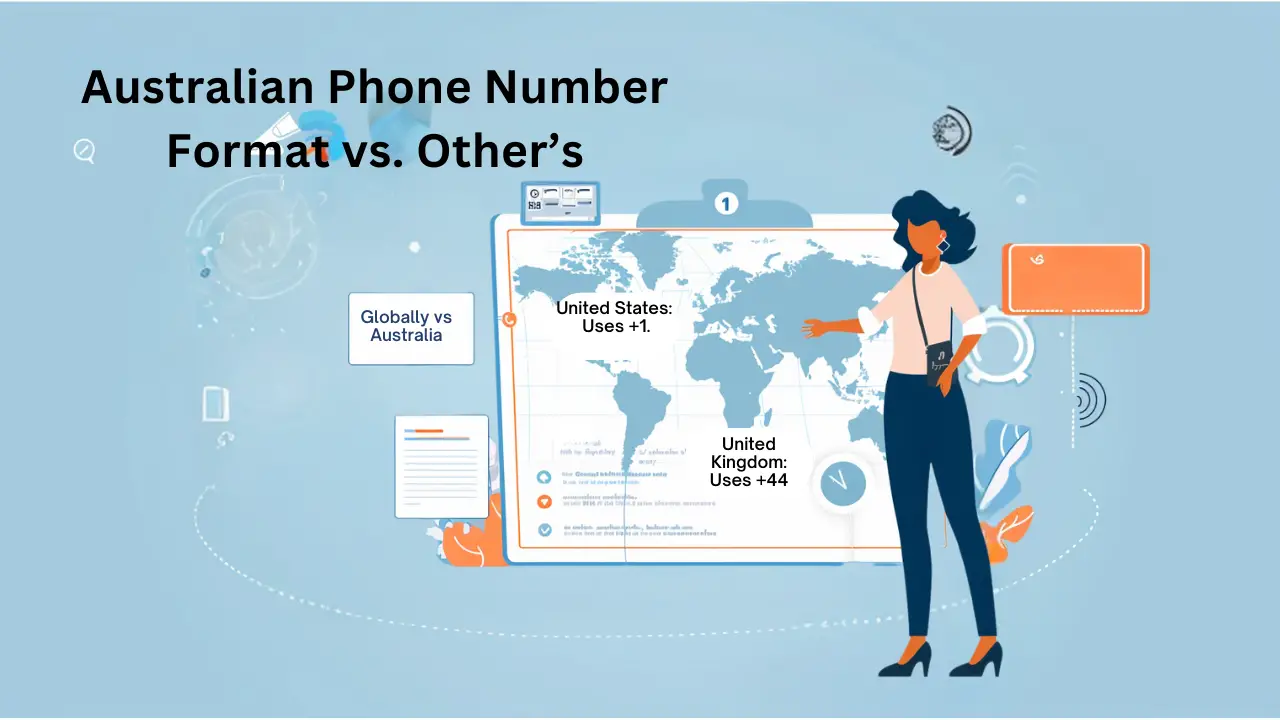
When you compare the Australian phone number format to other systems like the US, UK, or the Philippine phone number format, you'll notice some unique differences. Understanding these distinctions is essential when using an international calling app, as it helps prevent misdials and ensures accurate, reliable global communication.
Comparison of Australian Phone Numbers with Those of Other Countries
- Australia (+61): Uses single-digit area codes (e.g., 2) and 8-digit local numbers.
- USA (+1): Uses three-digit area codes (e.g., 212) and 7-digit local numbers.
- UK (+44): Area codes vary in length (2–5 digits), making it a bit more complex.
Here is a quick snapshot:
| Country | Country Code | Area Code Format | Local Number Length | Mobile Prefix |
|---|---|---|---|---|
| Australia | +61 | Single Digit (2, 3, 7, 8) | 8 digits | 04 |
| USA | +1 | Three Digits | 7 digits | None (same as landline) |
| UK | +44 | Variable (2–5 digits) | 6–8 digits | 07 |
Examples from Various Countries
- Australia: +61 2 1234 5678
- USA: +1 212 555 1234
- UK: +44 20 1234 5678
The distinct "04" prefix for Australian mobiles is a key differentiator—unlike in the US, where you can't tell if a number is mobile or landline just by looking at it.
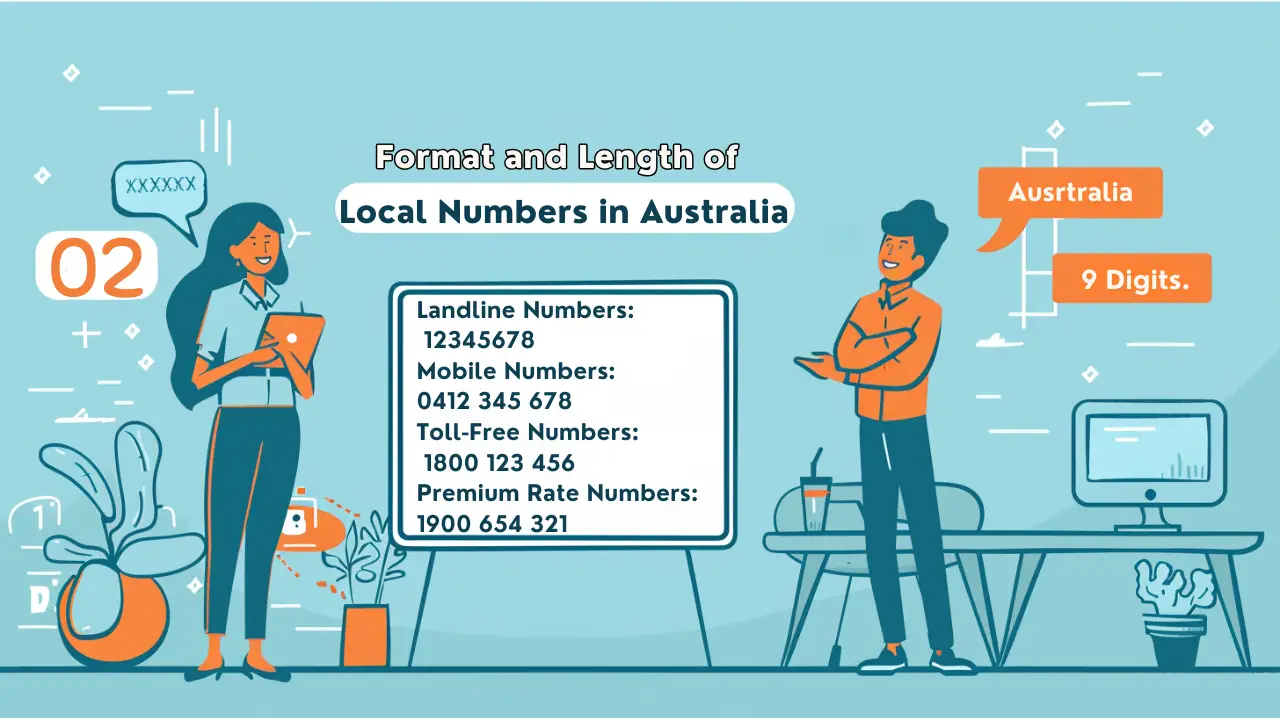
Format and Length of Local Numbers in Australia
Precision is everything. Australian numbers follow a strict pattern to ensure calls are routed to the right state or device.
Differences Between Landline and Mobile Numbers
Landline Numbers
These are tied to a physical location. They start with a 2-digit prefix (Area Code + Trunk Code 0) followed by 8 digits.
- Format: (0x) xxxx xxxx
- Example: (02) 9876 5432 (Sydney/NSW) or (03) 9876 5432 (Melbourne/VIC).
Mobile Numbers
These are personal and not tied to a specific city.
- Format: 04xx xxx xxx
- Example: 0412 345 678.
- Key Detail: All standard mobile numbers in Australia begin with 04.
Special Numbers (e.g., Toll-Free, Premium Rate)
- Toll-Free (1800): Free for the caller, this prefix suits customer support lines.
- Local Rate (1300): The cost is split between the caller and the business.
- Premium Rate (1900): These calls are expensive, used for competitions or advice.
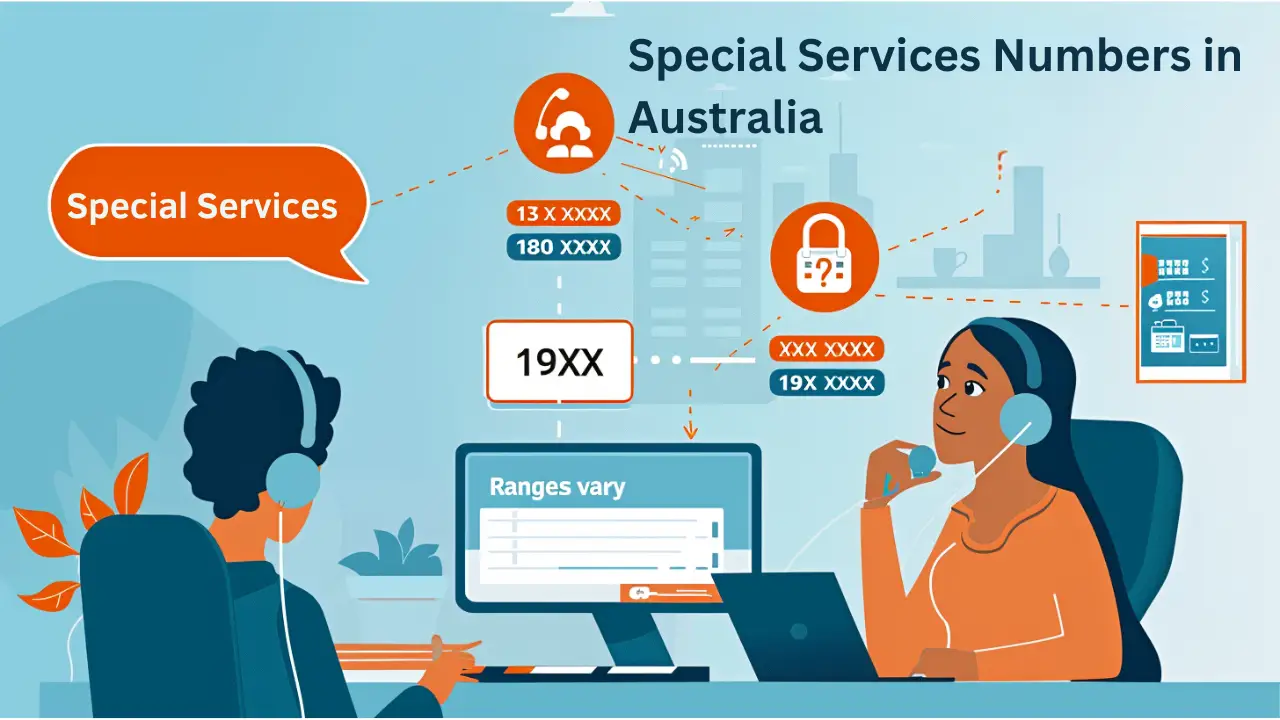
Special Services Numbers in Australia
Beyond standard calls, Australia has dedicated short codes for public services. These are mostly for domestic use and cannot usually be dialed from overseas.
Emergency Services (e.g., 000)
- 000 (Triple Zero): This critical number is free for emergencies.
Government and Public Services Numbers
- 13 Numbers: Short numbers like 13 11 14 serve organizations.
- Government Services: Lines like Medicare typically use 13 or 1300 numbers.
Business and Customer Service Lines
For businesses using cloud phone systems like Acepeak, choosing the right prefix is important:
- 1800: Signals "We care about you" (since the call is free) — a toll-free number suits customer support lines.
- 1300: Signals a professional, national presence.
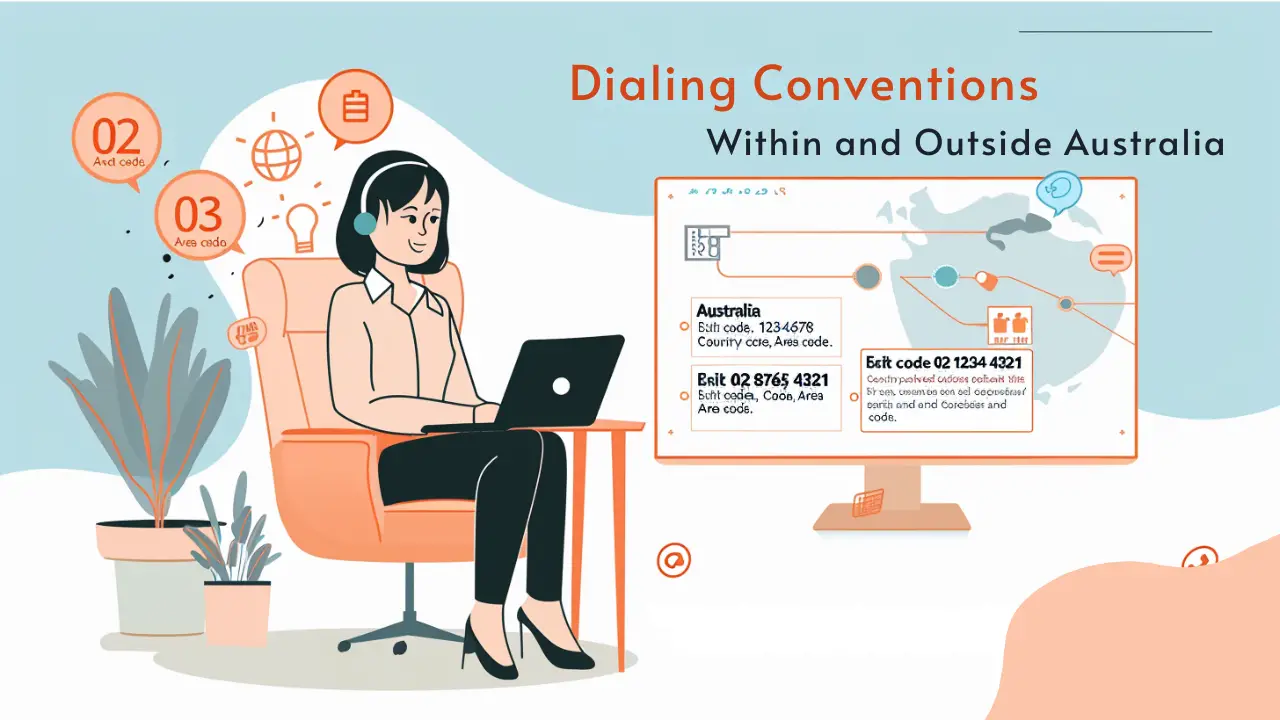
Dialing Conventions Within and Outside Australia
Confusion often arises when switching between local and international dialing. Here is the cheat sheet.
How to Dial Within Australia
- Local Landline: Dial the 8 digits directly (e.g., 9876 5432).
- Interstate: Add the area code with the zero (e.g., 03 9876 5432).
- Mobiles: Always dial the full 10 digits (e.g., 0412 345 678).
How to Dial to Australia from Other Countries
This is where most people make mistakes.
- Exit Code: Dial out of your country (011 for US, 00 for Europe).
- Country Code: Dial 61.
- Area/Mobile Code: Dial the code WITHOUT the zero.
- Correct: +61 4…
- Incorrect: +61 04…
Use of International Dialing Codes
The + symbol on mobile phones is a lifesaver. It automatically inserts the correct exit code for wherever you are. If you save Australian contacts in your phone, always save them in the format: +61 4xx xxx xxx.
Number Portability and Regulatory Compliance in Australia
Freedom of choice is a big deal in the Australian telecom market.
Policies on Number Portability
Wireless Local Number Portability (WLNP) and Mobile Number Portability (MNP) ensure you own your number, not the phone company.
- How it works: If you switch from a traditional carrier to a VoIP provider like Acepeak, you can bring your existing business numbers with you.
- Timeframe: Mobile number porting takes minutes; landlines, days.
Regulatory Bodies and Compliance
The system is kept fair by a few key players:
- ACMA: Sets the rules for numbering and carrier licenses.
- TIO (Telecommunications Industry Ombudsman): Resolves complaints about number porting and billing issues.
- Communications Alliance: Develops the technical standards that ensure calls connect clearly across different networks.
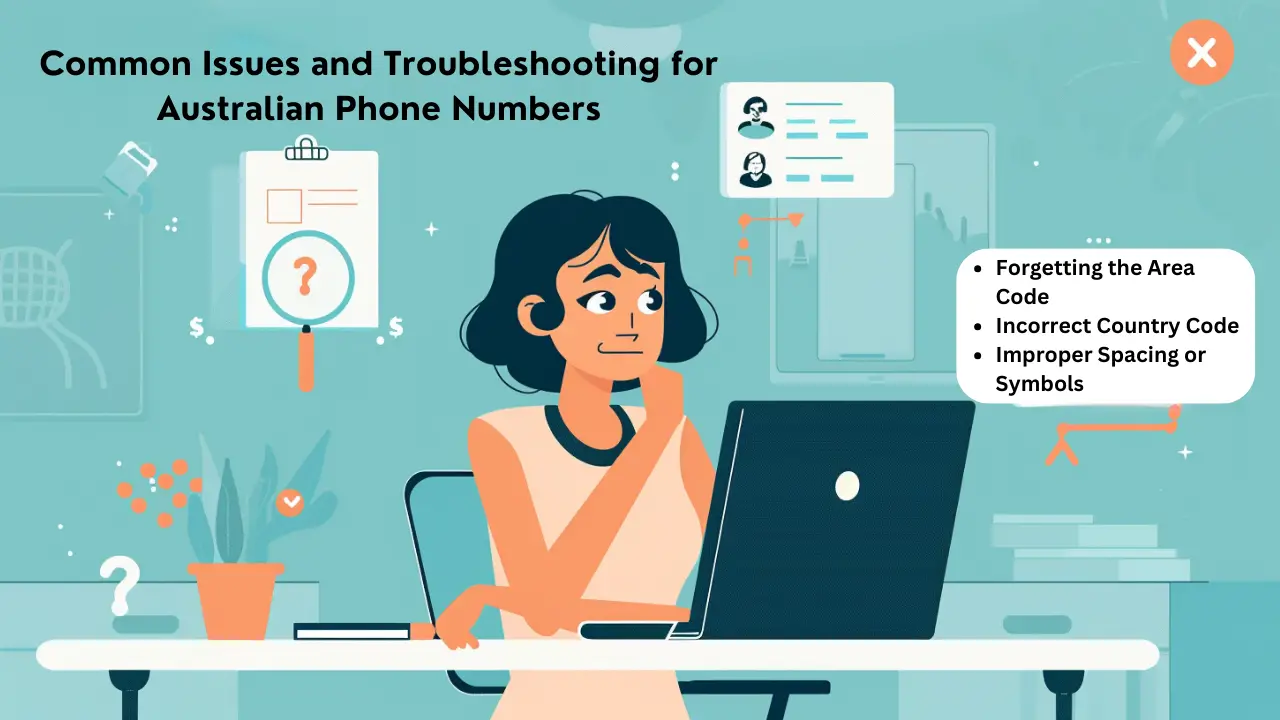
Common Issues and Troubleshooting for Australian Phone Numbers
Even with a simple system, errors happen. Here is how to fix the most frequent connection failures.
Misdialing and Incorrect Formats
- The "Double Zero" Error: Dialing +61 02 instead of +61 2 causes failure.
- Wrong Country Code: Accidentally dialing +43 (Austria) instead of +61 (Australia).
- Spacing Issues: Avoid dashes; use E.164 format for digital dialers.
How to Resolve Common Problems
- Check the Prefix: Ensure you are using +61.
- Remove the Leading Zero: If the number starts with 04, dial +61 4…
- Check Network Permissions: Ensure your PBX supports international Oceania calls.
- Verify the Number:Confirm if recipient's number is landline or mobile.
“The distinct "04" prefix for Australian mobiles is a key differentiator—unlike in the US, where you can't tell if a number is mobile or landline just by looking at it.”
Future Trends in Australian Phone Numbering
The traditional phone line is disappearing. As Australia moves toward a fully digital NBN (National Broadband Network) landscape, phone numbers are changing too.
Changes in Numbering Plans
With the population growing, the ACMA is constantly monitoring number supplies. We may eventually see:
- New Area Codes:If "04" range fills, new mobile prefixes may be released.
- Longer Numbers: Expanding local number lengths is a possibility for the future.
Impact of Technological Advancements
- VoIP Dominance: Businesses use cloud solutions like Acepeak to manage calls, reducing costs.
- Virtual Presence: You can now have a "Sydney" (02) number while sitting in London.
- Unified Comms: Phone numbers are becoming just one part of a larger ID that includes video, chat, and email.
Conclusion
Navigating the Australian phone number format is easier than it may seem. By understanding the Country Code (+61), Area Code, and the specific rules for mobile numbers, you'll be able to dial correctly.
This knowledge ensures smooth communication, whether you're calling locally or internationally, without encountering any issues.
As technology evolves, services like Teloz, Acepeak, and VoIP are making these numbers more flexible than ever. Whether you are dialing a government agency on a 1300 number or texting a friend on their 04 mobile, following these formatting rules ensures you stay connected without the headache of failed calls.


