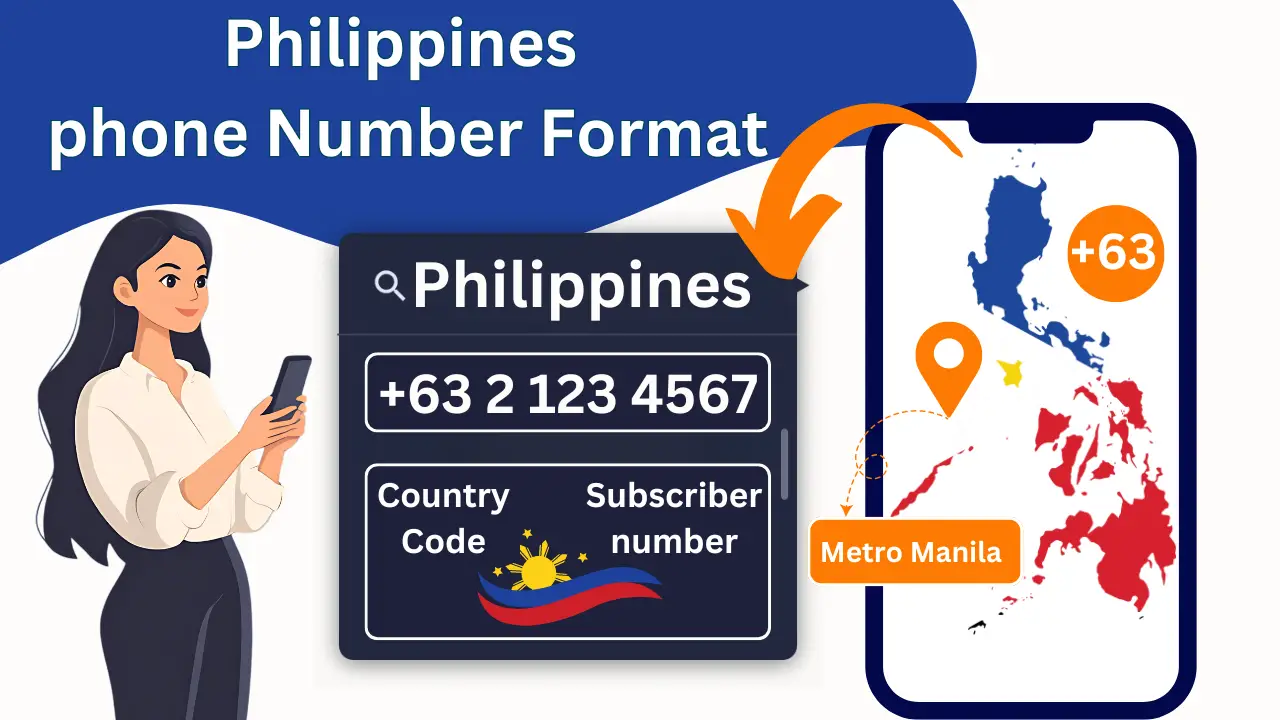
Introduction
Understanding phone number formats helps you communicate efficiently across borders. The Philippines uses a specific structure for its phone numbers. Knowing this format helps you make successful calls to and from the country.
This guide covers the key parts of the Philippines phone number format: area codes, network prefixes, and the differences between mobile and landline numbers.
It also covers best practices for formatting and dialing, so you can communicate clearly and avoid costly mistakes.
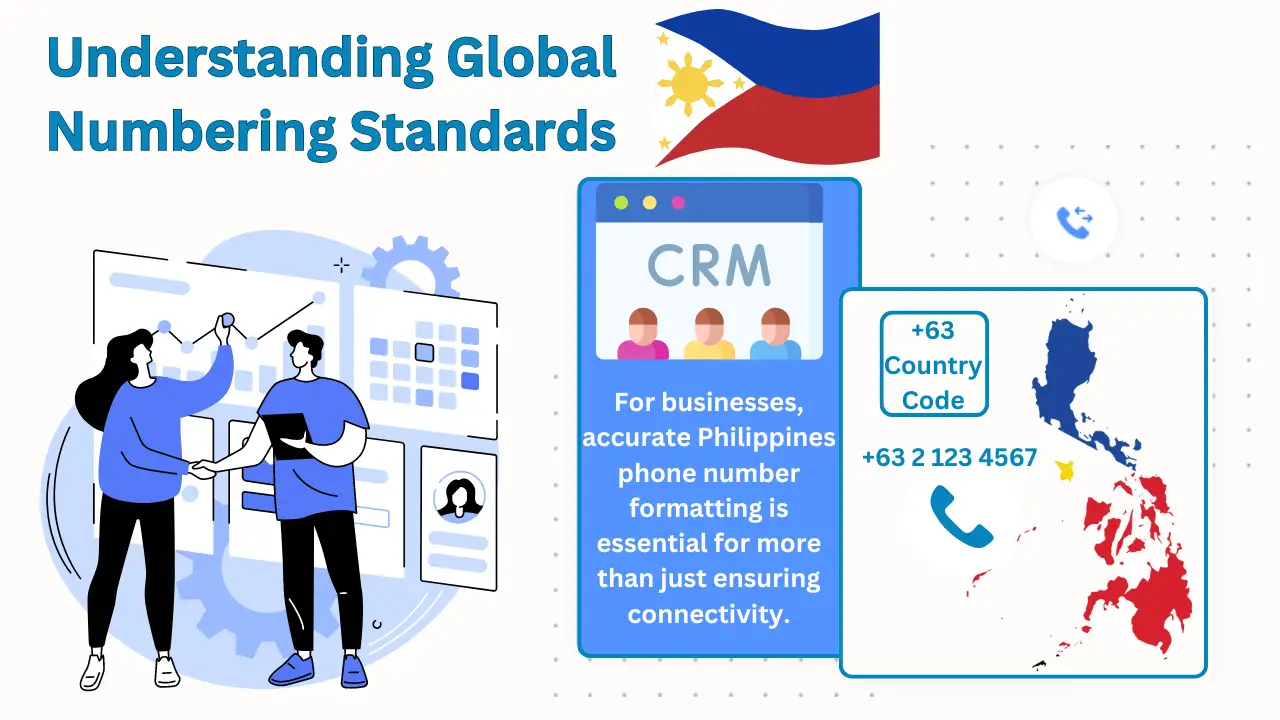
Understanding Global Numbering Standards
Phone numbers are a vital way to communicate, especially for businesses expanding across borders. Each country follows a standard system for how its phone numbers are structured.
These systems generally follow international guidelines such as the E.164 format. This format gives a consistent framework for both local and international dialling.
Phone numbers are not just a series of digits. They carry information about a region, service type, and communication infrastructure. For businesses, understanding these systems is key to keeping communication channels reliable.
Misunderstanding or incorrectly formatting phone numbers can lead to failed connections, missed opportunities, and a poor customer experience.
Why Number Format Matters in Business
For businesses, accurate Philippines phone number formatting matters for more than just connectivity. It affects everything from customer relationship management (CRM) to marketing campaigns and even security protocols. A properly formatted phone number ensures messages reach their intended recipients. Calls do not get dropped or misrouted, and automation systems can run efficiently.
Companies operating internationally, or those entering foreign markets like the Philippines, can reduce operational inefficiencies by understanding the local phone number format. It also prevents costly mistakes, such as sending communications to the wrong region or failing to connect with customers at all. A well-structured phone number also conveys professionalism. This gives customers confidence that your business is reliable.
How the Philippines Fits into Global Standards
The Philippines follows a unique phone number structure that aligns with global standards, yet fits the specific needs of its region. The country's phone number format includes a country code (+63), area codes, and a subscriber number. Each part plays a role in directing calls accurately. The system resembles other nations in Southeast Asia, though businesses should watch for nuances, particularly around mobile and landline numbers.
By following global numbering standards, businesses can keep their communication with the Philippines smooth, whether they deal with landline or mobile numbers. This also lets international organizations easily integrate Philippines phone numbers into their systems. That enables smooth cross-border communication and customer support.
philippines phone number format
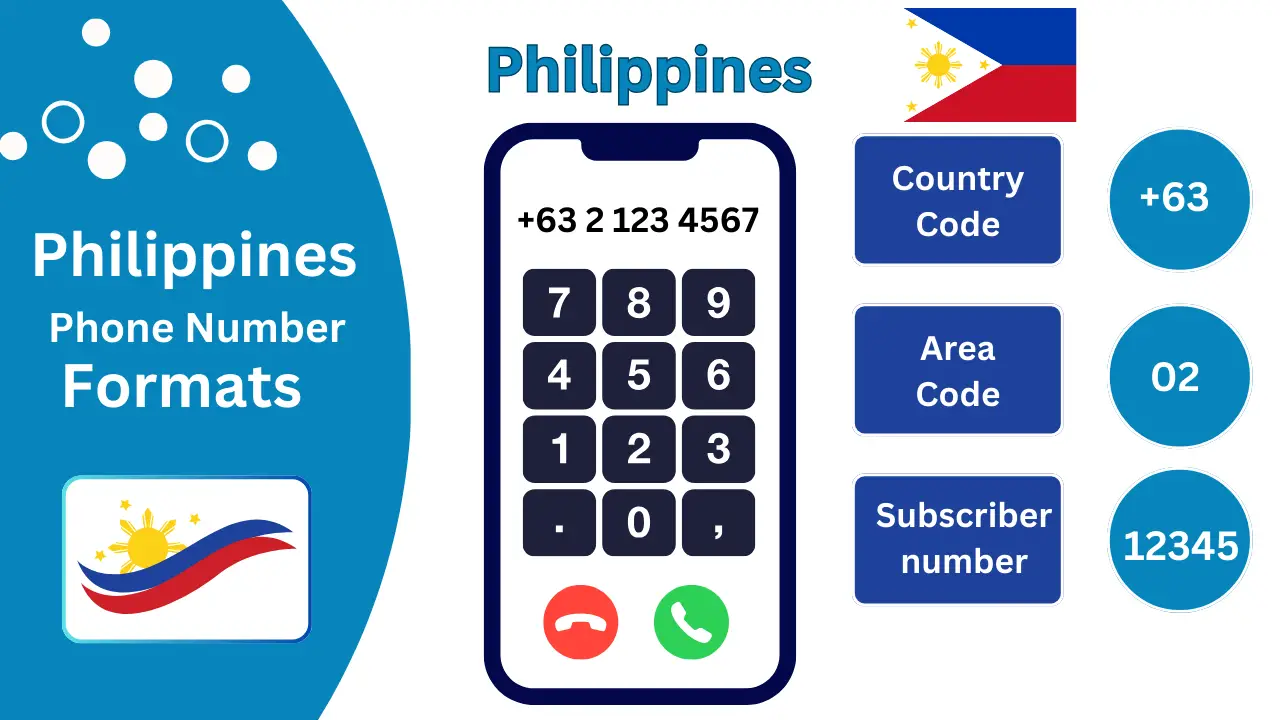
The Philippines phone number format follows a structured system that works for both local and international communication. It consists of the country code, area codes (for landlines), and mobile number prefixes (for mobile phones).
Here's a breakdown of the typical formats:
Country Code
The Philippines country code is +63. This code is used when dialing into the Philippines from outside the country.
Landline Phone Numbers
- Landline numbers in the Philippines are usually 7 digits long.
- Area codes are used to designate specific regions within the country.
- When calling a landline number locally, the format is: Area Code + Subscribers Number Example: (02) 123 4567 (for a Metro Manila number).
- When calling a landline number from abroad, the format is: +63 Area Code + Subscribers Number Example: +63 2 123 4567 (for Metro Manila).
Common Area Codes:
- Metro Manila: 02
- Cebu: 32
- Davao: 82
Mobile Phone Numbers
- Mobile numbers in the Philippines are 11 digits long and start with a mobile prefix, which indicates the mobile network operator.
- The format for local calls is: Mobile Prefix + Subscriber Number Example: 0917 123 4567.
- The format for international calls is: +63 Mobile Prefix + Subscriber Number Example: +63 917 123 4567.
Common Mobile Prefixes:
- 0917 or +63 917 for Globe Telecom
- 0998 or +63 998 for Smart Communications
Key Points to Note:
- Landline Numbers: Typically 7 digits, and always include the area code.
- Mobile Numbers: Always 11 digits, starting with the 09 prefix or +63 9 for international calls.
- International Dialing: Always start with +63, followed by the area code (for landlines) or mobile prefix (for mobile phones).
Examples of Philippines Phone Number Formats:
- Local Landline: (02) 123 4567 (Metro Manila) (32) 123 4567 (Cebu)
- International Landline: +63 2 123 4567 (Metro Manila) +63 32 123 4567 (Cebu)
- Local Mobile: 0917 123 4567 (Globe Telecom) 0998 123 4567 (Smart Communications)
- International Mobile: +63 917 123 4567 (Globe Telecom) +63 998 123 4567 (Smart Communications)
Understanding the correct Philippines phone number format ensures smooth communication, whether for business or personal use.
Benefits of Correctly Formatted Phone Numbers
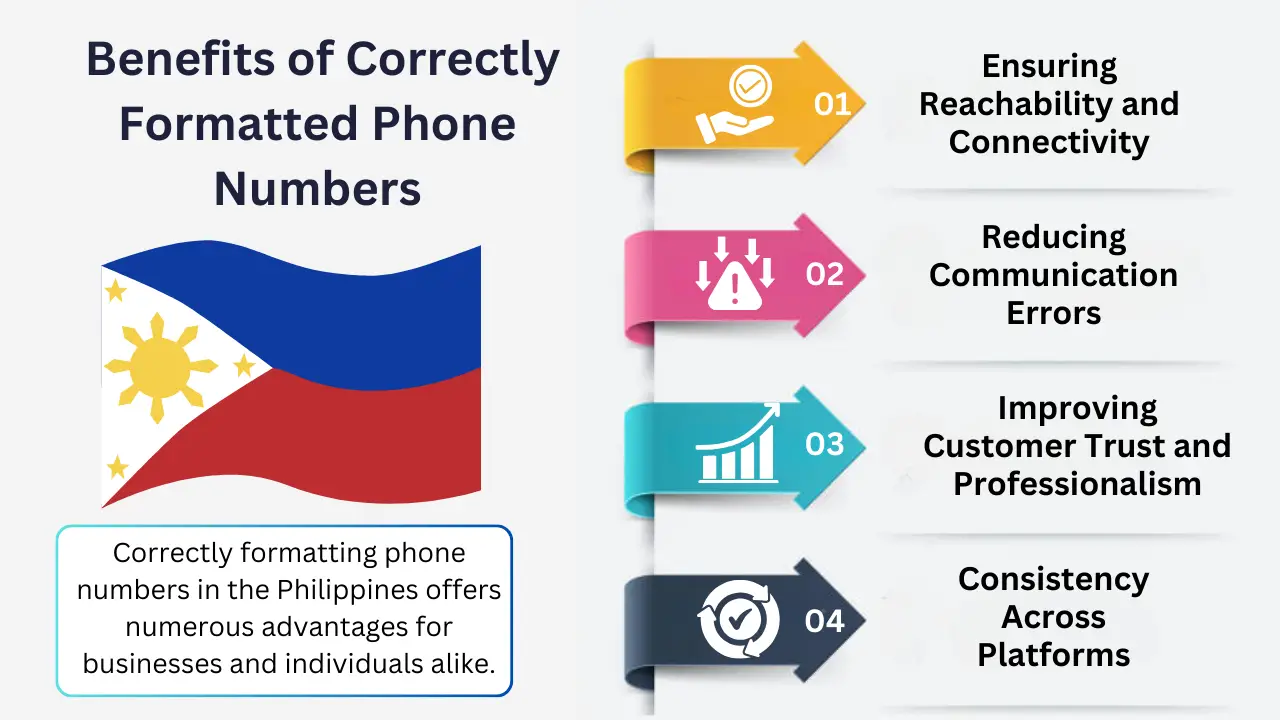
Correctly formatting phone numbers in the Philippines offers many advantages for businesses and individuals alike. It improves communication clarity by telling landline and mobile numbers apart.
This makes numbers easier to remember and cuts dialing errors, which improves the customer experience. This practice also supports better data management in CRM systems and helps meet local telecommunications regulations.
Ensuring Reachability and Connectivity
One of the biggest benefits of using correctly formatted phone numbers is that your business can reach its customers efficiently. Incorrectly formatted phone numbers may lead to calls being misrouted, blocked by telecommunication systems, or not connecting at all. Inaccurate number formats can prevent important messages and notifications from reaching clients. That results in lost business opportunities or dissatisfied customers.
For businesses that rely on customer service, sales, or marketing campaigns, correctly formatted phone numbers ensure that all communications, whether calls or SMS, reach the intended recipients. This matters most when dealing with international phone numbers format like those in the Philippines, where formatting variations can create real communication barriers. Proper formatting, especially with automated systems, helps businesses keep connectivity smooth across borders.
Reducing Communication Errors
Incorrectly formatted phone numbers can cause a range of communication errors. For instance, SMS messages might not be delivered, or calls might fail to connect, which wastes time and resources. These errors hit hardest for businesses that handle large customer databases, where correcting numbers by hand is slow and inefficient. By using standardized phone number formats, businesses can cut down on these communication errors. Real-time validation tools and CRM systems, as discussed earlier, can automatically flag improperly formatted numbers. This lets businesses fix these issues before they cause communication breakdowns.
When phone numbers are consistently formatted, both customers and businesses see fewer disruptions and smoother interactions. For example, if a business tries to send an SMS to a customer in the Philippines but the number is missing the +63 country code, the message will likely fail to deliver. Storing all numbers in their correct international format helps avoid such issues. This also cuts down the time spent troubleshooting failed communications.
Improving Customer Trust and Professionalism
Customers expect professional and reliable communication from the businesses they interact with. When a company consistently uses correctly formatted phone numbers, it shows professionalism and attention to detail. This reliability builds trust between a business and its customers, and makes them more likely to engage with the company's services or products. On the other hand, incorrect or inconsistent Philippines phone number formats can lead to failed connections, which can damage a business's reputation.
Customers may see the company as disorganised or unreliable, especially if they cannot reach the business when they need support. By keeping phone numbers correctly formatted, businesses can maintain a positive, professional image and build greater trust among their clientele. For instance, an e-commerce company in the Philippines that uses properly formatted phone numbers for SMS notifications and customer support will look more dependable. This improves the customer experience, and it also increases the chance of repeat business and referrals.
Consistency Across Platforms
Correctly formatted phone numbers also bring consistency to business operations across multiple platforms. Whether a business engages with customers through direct phone calls, email signatures, website contact forms, or social media, a consistent phone number format creates a unified experience. This consistency helps customers recognize the business's contact information easily, no matter where it appears. For businesses with multiple customer service or marketing platforms, a consistent Philippines phone number format ensures smooth transitions between channels. For instance, if a customer submits their phone number on a website form, and that number is stored in the correct format, it works smoothly with automated systems for follow-up calls or SMS.
By keeping uniformity across all touchpoints, businesses can build a more cohesive communication strategy. In summary, properly formatted phone numbers help businesses stay reachable, reduce errors, build customer trust, and keep consistency across communication platforms. This attention to detail improves both operational efficiency and the overall customer experience. That makes it an essential practice for businesses of all sizes.
Tools and Best Practices for Business Phone Number Formatting
Using tools and best practices for Philippines phone number format helps businesses keep communication smooth, both locally and internationally.
Whether it's storing customer data or managing automated communication systems, correctly formatted phone numbers matter. They can greatly reduce errors, improve reachability, and boost customer satisfaction.
Tools like Customer Relationship Management (CRM) systems and real-time validation APIs help businesses keep formatting consistent across all platforms. This makes it easier to store, retrieve, and use phone numbers without running into issues.
Using CRM Systems for Consistent Formatting
- CRM tools for standardizing formats: Many Customer Relationship Management (CRM) systems allow businesses to enforce standardized phone number formats. By setting up formatting rules, you can ensure that all numbers entered into your system adhere to a uniform format. Example: For the Philippines, a CRM system can automatically add the +63 country code to any local phone number entered. This ensures that the number is properly formatted for both domestic and international communication.
- Predefined templates: CRM platforms can be configured to use templates that ensure numbers are consistently entered with or without spaces, dashes, or parentheses. This uniformity prevents discrepancies that can occur when multiple employees enter data differently. By using predefined templates, businesses can also reduce the manual effort required to reformat phone numbers. This ensures that all numbers stored in the system are correctly formatted and ready for immediate use.
Real-Time Validation Tools
- APIs for phone number validation: Real-time validation tools such as Twilio Lookup, Numverify, and Phone Number Validation provide instant validation when a phone number is entered into a system. These APIs can confirm whether a phone number is correctly formatted, Active, and whether it belongs to a mobile or landline. These APIs ensure that businesses always store accurate, working phone numbers in their systems, reducing the likelihood of failed communication.
- Integration with CRM and other platforms: Real-time validation APIs can be integrated into CRM systems, web forms, or other platforms. As numbers are entered, they are checked for accuracy and proper formatting. Example: If a Philippines phone number format is entered incorrectly without the +63 country code, the validation tool will flag it, prompting the user to correct the format before the number is saved.
Storing and Formatting Phone Numbers for Automation
- International format for consistency: To ensure seamless communication across both local and international channels, businesses should store all phone numbers in international format. For the Philippines, this means storing numbers as +63 followed by the area code or mobile prefix. This approach prevents errors when numbers are used in automated systems, such as SMS campaigns, customer service platforms, or marketing tools.
- Avoiding special characters: Phone numbers should be stored without special characters such as spaces, dashes, or parentheses. Instead, store numbers in a simple, continuous format like +639171234567. This formatting practice ensures compatibility with automation tools, as many systems do not recognize special characters or may misinterpret them. Consistently using a straightforward format guarantees that numbers will function properly across all platforms.
“Phone numbers are not just a series of digits. They represent specific information about a region, service type, and even the communication infrastructure in place.”
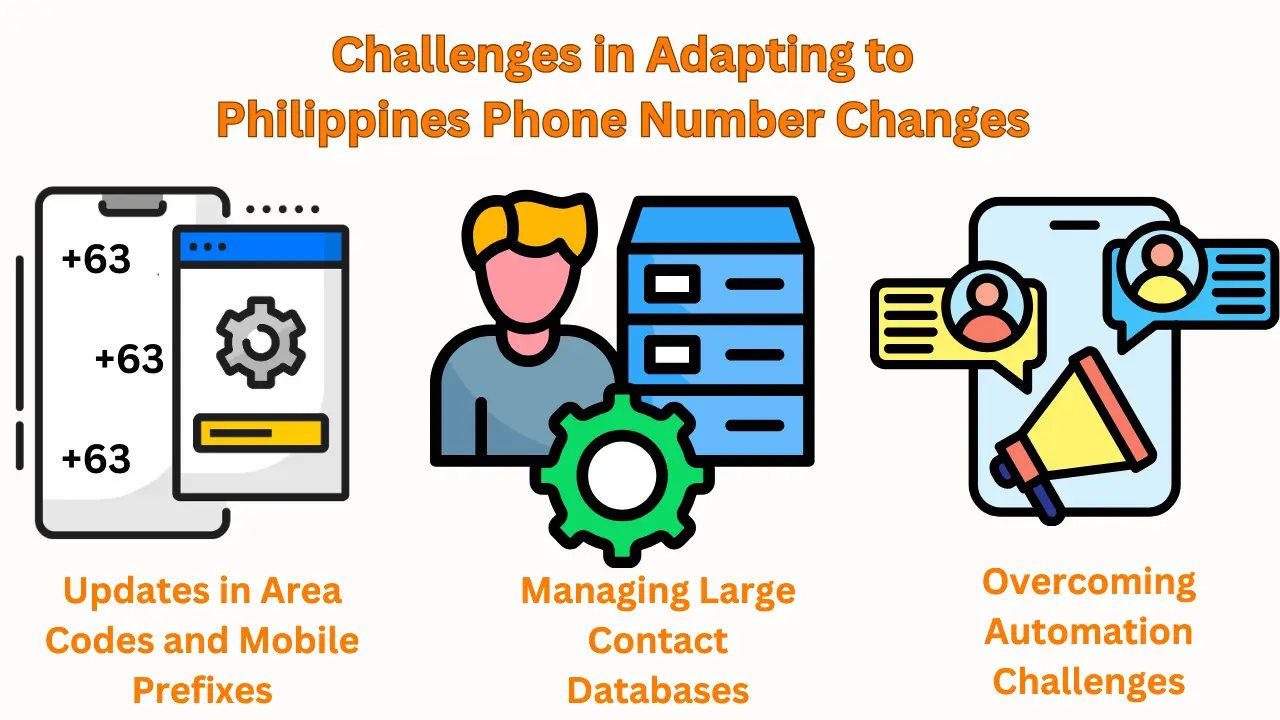
Challenges in Adapting to Philippines Phone Number Changes
Adapting to changes in the Philippines' phone number format structures is a big challenge for businesses. This is especially true for those with large customer databases or automated communication systems.
Area codes and mobile prefixes shift due to infrastructure updates, regulatory changes, or population growth. Businesses must keep their contact systems up to date to avoid communication disruptions.
Here are some key challenges and how businesses can overcome them.
Updates in Area Codes and Mobile Prefixes
One of the main challenges for businesses is staying informed about updates in area codes and mobile prefixes in the Philippines. These changes can come from shifting population densities, upgrades in telecommunications infrastructure, or new government regulations. When businesses overlook these changes, they risk sending calls and messages to the wrong destinations. That causes communication breakdowns that can harm customer relationships.
To reduce this risk, businesses should subscribe to official government or telecommunications notifications that provide updates on area codes and prefixes. Using automated services or APIs that track these changes in real time also helps businesses stay on top of the most current information. With regular database audits and system updates, companies can adapt quickly to changes in phone number structures. This keeps disruptions to their communication strategies to a minimum.
Managing Large Contact Databases
For companies with large-scale customer databases, adapting to changing phone numbers can be especially hard. Even small shifts in area codes or mobile prefixes can affect thousands of contacts, leading to failed connections or lost communication opportunities. Without a clear strategy to manage these updates, businesses may face operational challenges.
One effective solution is to use CRM systems that support bulk updates. This lets businesses modify large quantities of contact data quickly. Integrating phone number validation tools and APIs into CRM systems can speed up the process further, since these tools automatically identify outdated phone numbers and update them to the latest format. Scheduled data cleansing routines can also help keep databases accurate over time. Businesses should also create protocols for verifying phone numbers with customers directly. This adds an extra layer of accuracy to their contact lists.
Overcoming Automation Challenges
Automation systems, such as SMS marketing platforms, customer support services, or VoIP systems, are often affected by changes in phone number structures. These systems typically follow strict rules for formatting and storing phone numbers. When area codes or mobile prefixes change, automated systems may fail to recognize the new formats. This can result in undelivered messages, incomplete customer profiles, or even missed sales opportunities.
To tackle this issue, businesses should build systems that can adjust to changes in Philippines phone number formats. By integrating APIs that track updates in real time, companies can keep their automated systems working with the most current phone number formats. Regular testing of automation systems and updating predefined formatting rules can also help prevent communication failures. By staying proactive in updating their automated processes, businesses can avoid disruptions. This keeps communication smooth with customers, even when phone number formats change.
Conclusion
Understanding the Philippines phone number format matters for clear communication in both personal and business settings. Correctly formatted numbers ensure reachability and reduce errors.
They also build customer trust and boost professionalism. As businesses work through the details of phone number structures, they can adopt tools and best practices such as using CRM systems and real-time validation.
This will greatly improve their communication efforts.


