Introduction
At first glance, UK phone numbers might seem like a puzzling array of digits, but fear not! This beginner-friendly guide will help you crack the code and master the art of dialing UK numbers in no time.
By understanding the key elements that make up a UK phone number, you'll be able to navigate the calling process with confidence.
The Building Blocks of a UK Phone Number
Every UK phone number is made up of a few core parts. Once you recognise them, dialling becomes second nature.
- ?? country code: The UK's country code is always "+44. Think of it as the passport to the UK's telephone network.
- ?? Area Code: Ranging from 2 to 5 digits, the area code tells you the geographic region of the number (e.g., "020" is the calling card for London).
- ?? Subscriber Number: The unique 5 to 8-digit combination that identifies the specific phone line you're trying to reach.
Dialing Made Easy:
Calling from within the UK? Here's what you need to know: ?? Mobile: Simply dial the full number, including the leading "0" (e.g., 07123 456789). ?? Landline: Dial the complete number, including the area code (e.g., 020 7123 4567).
Calling from outside the UK?
No problem! ?? Just swap the leading "0" with the UK's country code "+44" (e.g., +44 7123 456789 or +44 20 7123 4567).
Decoding UK Number Types:
?? Mobile: These numbers start with "07" and typically have 11 digits. ?? Landline (Geographic): Beginning with "01" or "02", these numbers are tied to specific area codes. ?? Freephone: Starting with "0800" or "0808", these numbers are completely free to call. ?? Non-Geographic: With prefixes like "03" or "08", these numbers aren't linked to a particular geographic location.
The UK Phone Number Format — Overview
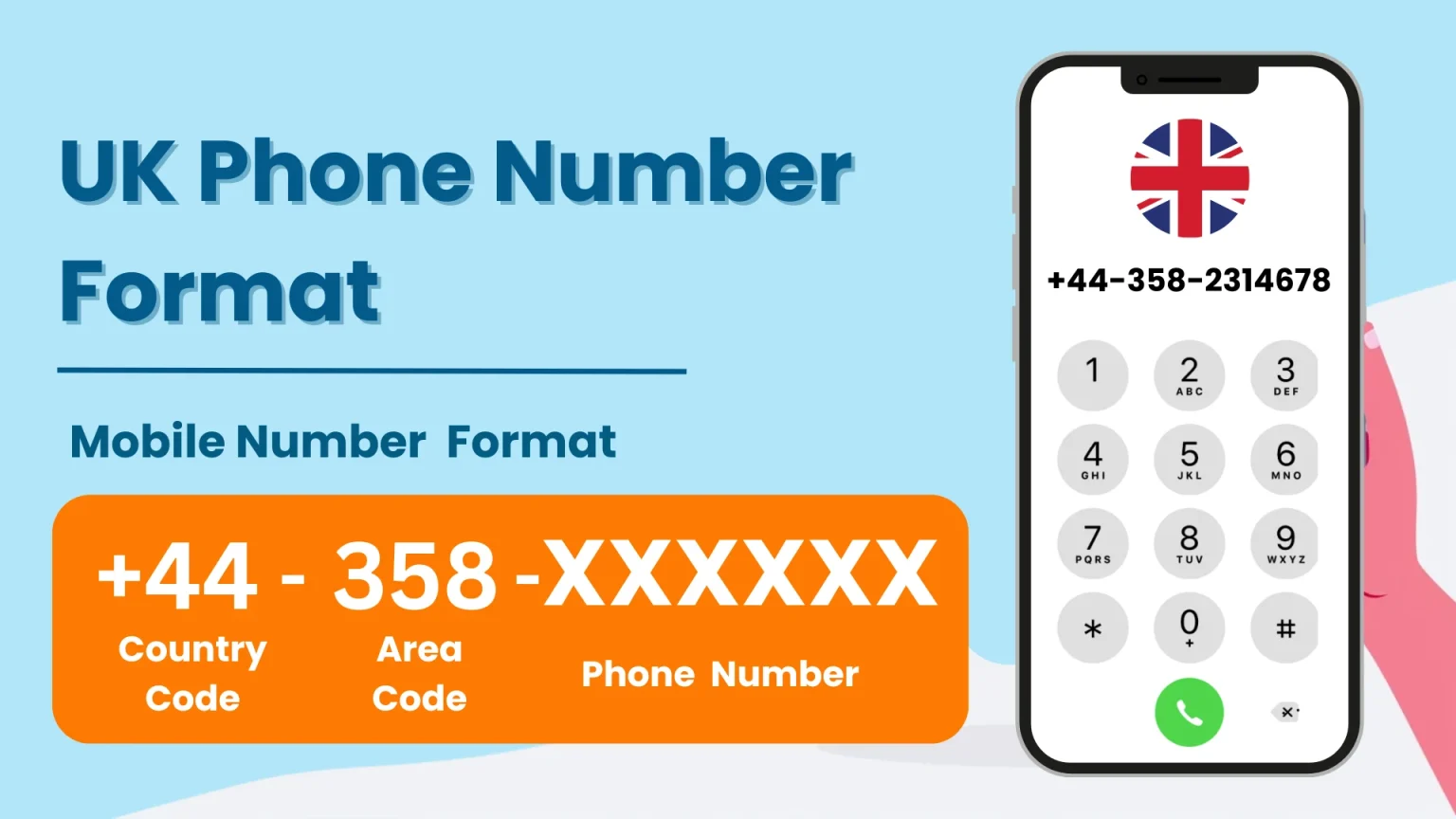
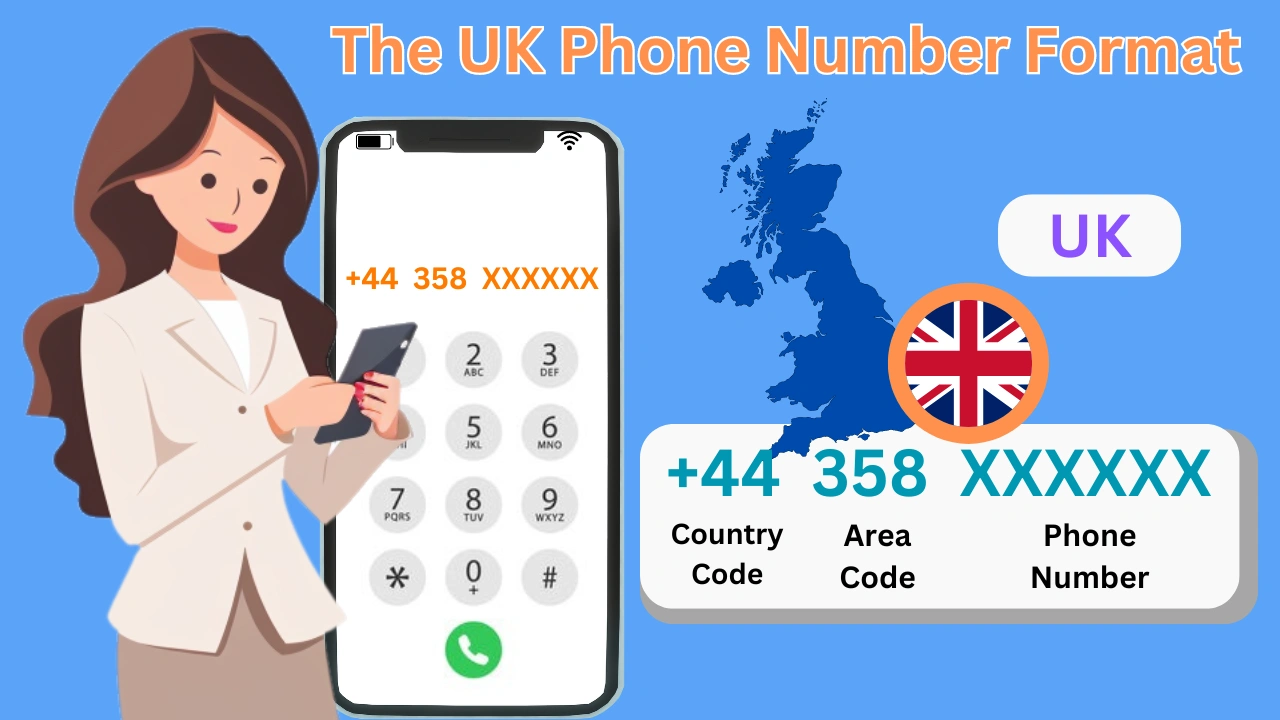
The United Kingdom phone number format consists of several components that must be followed to ensure proper dialing and connection. The format includes:
- Country Code: The dialing code +44 is used to call the UK from outside the country. This allows the telephone network to route the call to the appropriate destination country.
- Area Codes: Within the UK, area codes are used to identify different geographic regions or cities. These codes are typically 2-6 digits long and follow the country code when dialing from abroad. Some common area codes include 020 for London, 0113 for Leeds, and 0141 for Glasgow.
- Subscriber Number: This is the unique number assigned to an individual telephone line within a specific area code region. Subscriber numbers can range from 4-8 digits in length, depending on the area code and number allocation plan.
To dial a UK mobile phone number from abroad, follow the format: +44 (Mobile Prefix) (Remaining Digits). For example, to call a UK mobile number from outside the UK, the format would be: +44 7XXX XXXXXX. This format ensures accurate dialing and connectivity when reaching UK mobile phone numbers internationally.
When dialing within the UK, the area code must be included, but the leading "0" is typically omitted. For example, to call a Leeds number from within the UK, the format would be: 0113 XXX XXXX.
Following the correct format phone number is crucial for ensuring successful call connections and avoiding potential dialing errors or misrouted calls.
The Structure of UK Phone Numbers
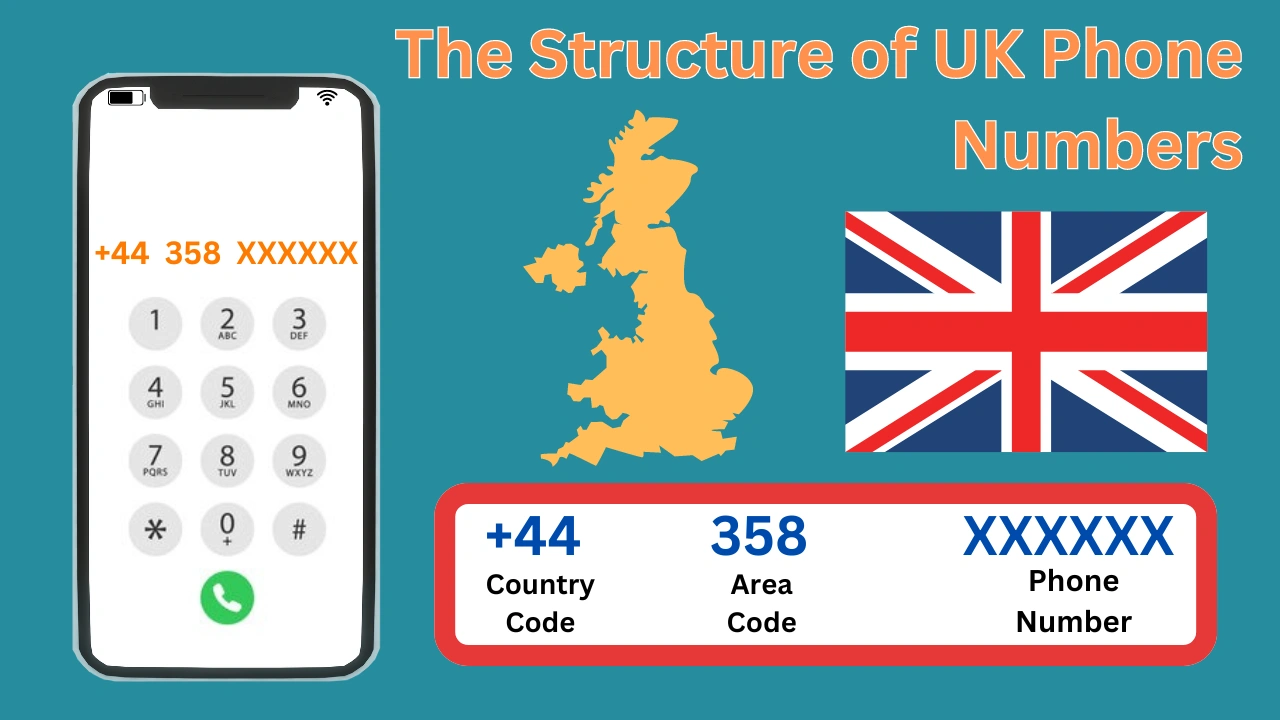
UK phone numbers follow a specific structure to ensure consistency and facilitate accurate routing within the telecommunication network.
The structure comprises the following components:
Country Code: The dialing code +44 is used to call UK numbers from outside the country.
Area Code: Area codes are used to identify different geographic regions or cities within the UK. These codes typically have 2-6 digits and follow the country code when dialing from abroad.
Subscriber Number: This is the unique number assigned to an individual telephone line within a specific area code region. Subscriber numbers can range from 4-8 digits in length.
The different types of UK phone numbers adhere to the following formats:
| Type | Format |
|---|---|
| Geographic Numbers | Area Code + Subscriber Number |
| Mobile Numbers | "07" + 10 or 11 Digits |
| Freephone Numbers | 0800 or 0808 + Subscriber Number |
| Non-Geographic Numbers | 03, 05, 08, or 09 + Subscriber Number |
Geographic Numbers: These numbers are associated with a specific geographic area and have the format of (Area Code) + (Subscriber Number).
Mobile Numbers: Mobile numbers in the UK start with the prefix "07" followed by 9 or 10 additional digits, totaling 10 or 11 digits.
Freephone Numbers: These numbers, starting with 0800 or 0808, are toll-free and typically used for customer service or helplines.
Non-Geographic Numbers: These numbers, beginning with 03, 05, 08, or 09, are not tied to any specific geographic location and are often used for various services.
The overall format for dialing a UK number from abroad is:
+44 (Area Code) (Subscriber Number)
Understanding and adhering to the correct structure of UK phone numbers is crucial for ensuring successful call connections and avoiding potential dialing errors or misrouted calls, regardless of the type of number being dialed.
Types of UK Phone Numbers
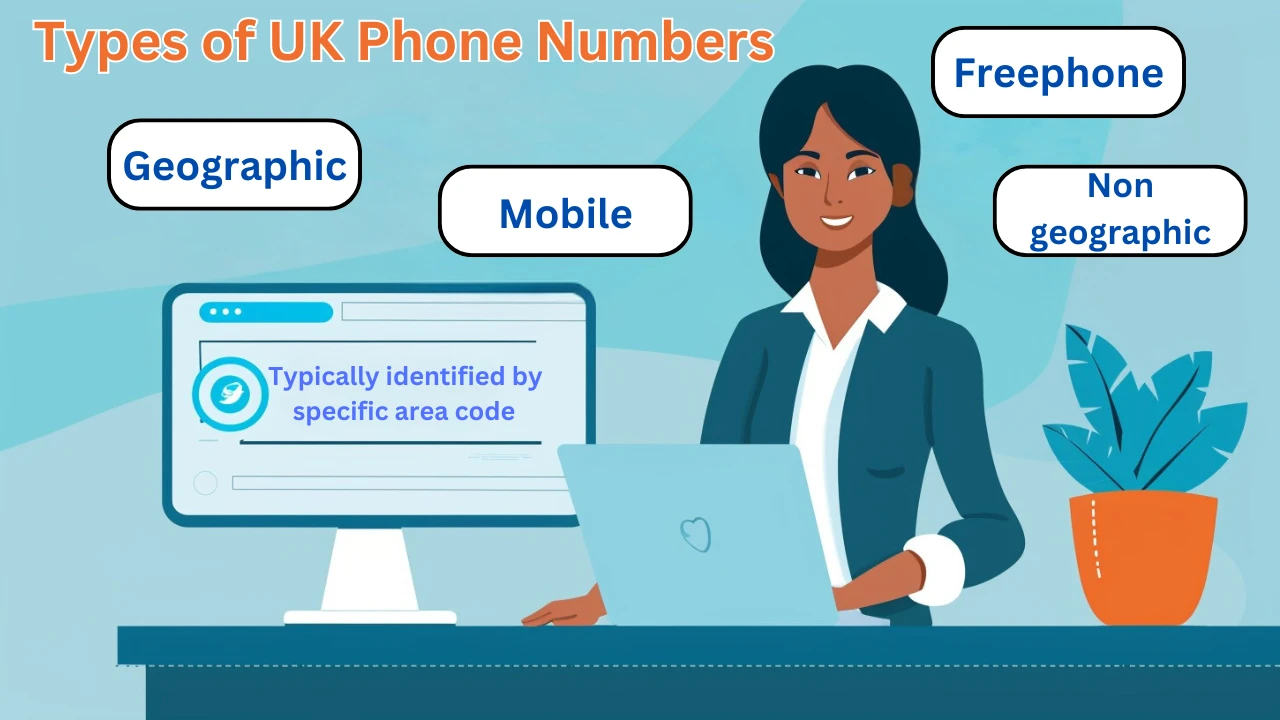
UK numbers come in several types. Geographic numbers are tied to specific regions and are commonly used for landlines.
Mobile numbers offer flexibility without a fixed location. Freephone numbers allow toll-free calling, and non-geographic numbers can be used for a wide range of services.
Geographic numbers use area codes to identify location. For example, London phone numbers start with "020." These numbers are important for businesses that serve a specific region and want to establish a local presence. Mobile numbers in the UK begin with "07" followed by 10 or 11 digits. They are widely used by individuals and businesses alike, offering mobility and convenience.
Freephone numbers in the UK are designated for toll-free calling. These numbers start with "0800" or "0808" followed by six or seven digits. Organizations often use freephone numbers to encourage customers to contact them without incurring any charges, enhancing accessibility and customer satisfaction.
Non-geographic numbers in the UK are known for their versatility. They are not tied to a specific location and can be used for a wide range of purposes. Non-geographic numbers include those starting with "03," which are used for inclusive call charges, and premium rate numbers beginning with "09," which are associated with higher call costs. These numbers provide flexibility for businesses to offer services, support lines, and helplines across the country.
- Geographic numbers are associated with specific regions in the UK and use area codes to denote locations.
- Mobile numbers in the UK are not location-dependent and start with "07" followed by 10 or 11 digits.
- Freephone numbers allow toll-free calling and typically start with "0800" or "0808" followed by six or seven digits.
- Non-geographic numbers in the UK offer versatility and can be used for a variety of purposes, including inclusive call charges and premium rate services.
Table: Types of UK Phone Number Format
| Type | Prefix | Number of Digits | Characteristics |
|---|---|---|---|
| Geographic | Area code | Variable | Associated with specific regions |
| Mobile | 07 | 10 or 11 | Not location-dependent |
| Freephone | 0800 or 0808 | 6 or 7 | Toll-free calling |
| Non-geographic | Variable | Variable | Versatile and not tied to a specific location |
UK Mobile Numbers — 10 or 11 Digits
UK mobile numbers typically begin with "07" and can have either 10 or 11 digits. These numbers are widely used for personal and business communication, offering flexibility and convenience.
When dialling a UK mobile number, it is important to include the country code (+44) before the actual number. This ensures that the call is directed to the correct country. The area code, which follows the country code, helps identify the network provider and the general location of the mobile number.
To illustrate the format, let's take an example of a UK mobile number: +44 7XXX XXX XXX. In this format, the "7" is the starting digit of a UK mobile number, followed by the remaining 9 or 10 digits. The X's represent the individual digits that make up the subscriber number. It is essential to include all digits correctly for successful dialling.
Understanding the UK mobile number format is crucial for effective communication within the country. Mobile numbers in the UK follow a specific structure starting with "07" followed by 9 or 10 additional digits, totaling 10 or 11 digits overall. Adhering to this standard format ensures accurate call routing and seamless connectivity, whether for personal calls or business purposes. Utilizing the correct UK mobile number format prevents dialing errors and facilitates successful connections within the country's telecommunication network.
Considerations for Choosing a UK Phone Number
When selecting a UK phone number for your business, it's essential to consider factors such as your target audience's location and the features offered by different providers.
Understanding Advanced Features for Your Business.
As businesses continue to evolve and customer expectations rise, having access to advanced telecommunication features can provide a significant competitive advantage. These features go beyond basic call handling and offer enhanced capabilities that can streamline operations, improve customer service, and boost overall efficiency. By understanding and leveraging advanced features, businesses can effectively address their unique communication needs and deliver a superior experience to their clients.
- Call Routing and Call Forwarding: These features allow businesses to intelligently manage incoming calls by routing them to specific departments, extensions, or even mobile devices based on predefined rules or schedules. Call forwarding ensures that important calls are never missed, even when employees are away from their desks or working remotely.
- Interactive Voice Response (IVR) Systems: IVR systems provide automated self-service options for callers, guiding them through a menu of choices to quickly direct their inquiries to the appropriate department or representative. This feature can significantly reduce wait times and improve overall customer satisfaction.
- Virtual Receptionists and Auto-Attendants: These advanced features act as a virtual front desk, greeting callers and providing them with options to reach the desired extension or leave a message. Virtual receptionists can handle multiple calls simultaneously, ensuring that no caller is left unattended.
- Call Recording and Analytics: Call recording allows businesses to capture and store phone conversations for training, quality assurance, or compliance purposes. Call analytics, on the other hand, provides valuable insights into call patterns, duration, and customer interactions, enabling data-driven decision-making and process optimization.
- Conference Calling and Video Conferencing: These features facilitate seamless communication and collaboration among teams, clients, or business partners, regardless of their physical locations. Conference calling and video conferencing enhance productivity, reduce travel costs, and enable real-time discussions and decision-making.
By understanding and implementing advanced telecommunication features tailored to their specific needs, businesses can streamline their operations, enhance customer service, and gain a competitive edge in their respective industries.
Table: Comparison of UK Phone Number Providers
When selecting a UK phone number for your business, it's essential to consider factors such as your target audience's location and the features offered by different providers. The table below provides a comparison of various UK phone number providers and their respective features and costs:
| Provider | Merkmale | Cost |
|---|---|---|
| Teloz | Advanced call routing, virtual receptionist, call analytics | Starting at $19.99/month |
| UK Telecom | Call forwarding, voicemail, online account management | Starting at $10/month |
| Virgin Media | Caller ID, call waiting, voicemail | Starting at $12/month |
Target Audience Location:
- If your business primarily serves a specific region, choosing a geographic number tied to that area can help establish a local presence and build trust with your customers.
- If your business operates nationally or internationally, a non-geographic number may be more suitable as it is not tied to a specific location and can reach customers across different regions or countries.
Provider Features:
- Consider the features and services offered by different providers, such as advanced call routing options, virtual receptionists, call analytics, call forwarding, voicemail, and online account management.
- Select a provider that aligns with your specific needs to ensure that your UK phone number supports your business operations effectively.
Phone Number Types:
Geographic Numbers: These numbers are associated with a specific geographic area and have the format of (Area Code) + (Subscriber Number).
Mobile Numbers: Mobile numbers in the UK start with the prefix "07" followed by 9 or 10 additional digits, totaling 10 or 11 digits.
Freephone Numbers: These numbers, starting with 0800 or 0808, are toll-free and typically used for customer service or helplines.
Non-Geographic Numbers: These numbers, beginning with 03, 05, 08, or 09, are not tied to any specific geographic location and are often used for various services.
When choosing a UK phone number for your business, take the time to research and compare different providers to find the one that best meets your requirements. By considering factors such as target audience location and provider features, you can select an optimal phone number that enhances your communication and supports your business growth.
Benefits of Understanding the UK Phone Number Format
Understanding the standard local formatting provides numerous benefits, including simplified dialing, improved communication efficiency, and accurate phone number formatting.
By familiarizing yourself with the structure of UK phone numbers, you can easily identify and dial the correct numbers, ensuring that you reach the intended recipient without any confusion or errors.
This saves time and eliminates the frustration of misdialing or encountering incorrect numbers.
Efficient communication is essential in both personal and business settings. With a clear understanding of the format phone number, you can communicate more effectively with individuals and organizations in the UK. By following the recommended guidelines and formatting, you can ensure that your phone numbers are correctly entered and recognized, leading to smoother conversations and better overall communication.
Accurate phone number formatting is crucial for establishing a professional image and maintaining credibility. By adhering to the standard UK phone number format, you can present a polished and reliable impression to your customers, clients, or business partners. Having a correctly formatted phone number instills trust and confidence in your contacts, making it easier for them to reach out to you and establish a connection.
Memorizing the UK phone number format can be made easier with these helpful tips and techniques, ensuring that you can effortlessly dial UK phone numbers when needed.
To aid in memorization, it is useful to break down the format into its key components. Start by familiarizing yourself with the country code for the UK, which is +44. This code is essential for dialing UK phone numbers from abroad.
Next, focus on the area code, which corresponds to specific regions within the UK. Take note of the different area codes and their associated locations, as this will help you quickly identify the origin of a phone number.
Finally, become familiar with the subscriber number, which is the unique identifier for each phone line. Pay attention to the number of digits, as mobile numbers can have either 10 or 11 digits depending on the specific format.
By breaking down the UK phone number format into these key components and regularly practicing dialing different numbers, you will develop a natural familiarity with the format. Additionally, consider creating mnemonic devices or association techniques to aid in remembering specific numbers or patterns.
With consistent practice and the incorporation of these memorization techniques, you will soon be able to effortlessly dial UK phone numbers with confidence and accuracy.
Key Components of UK Phone Number Format:
| Components | Beispiel |
|---|---|
| Landesvorwahl | +44 |
| Vorwahl | 20 |
| Abonnentennummer | 12345678 |
Fehlerbehebung bei häufigen Einwahlproblemen im Vereinigten Königreich
Selbst wenn Sie das britische Telefonnummernformat richtig verstehen, können dennoch Wählprobleme auftreten. In diesem Abschnitt geht es darum, einige häufig auftretende Herausforderungen anzugehen und Schritte zur Fehlerbehebung bereitzustellen, um diese effektiv zu lösen.
Es kann keine Verbindung zu britischen Nummern hergestellt werden:
- Stellen Sie sicher, dass Sie die richtige Landesvorwahl (+44) angeben, wenn Sie von außerhalb des Vereinigten Königreichs wählen.
- Überprüfen Sie die Vorwahl und die Teilnehmernummer noch einmal auf Richtigkeit.
- Stellen Sie sicher, dass Sie keine zusätzlichen Ziffern weglassen oder hinzufügen.
Abgebrochene Anrufe oder schlechte Anrufqualität:
- Überprüfen Sie die Stärke Ihrer Internetverbindung, wenn Sie VoIP oder internetbasierte Anrufdienste nutzen.
- Stellen Sie sicher, dass Ihr Mobilgerät über eine ausreichende Signalstärke verfügt oder erwägen Sie den Wechsel zu einer Festnetzverbindung.
- Versuchen Sie, von einem anderen Standort oder Netzwerk aus anzurufen, wenn das Problem weiterhin besteht.
Schwierigkeiten, Mobiltelefonnummern zu erreichen:
- Vergewissern Sie sich, dass Sie das richtige 10- oder 11-stellige Mobiltelefonnummernformat wählen, beginnend mit „07“.
- Überprüfen Sie, ob die Mobiltelefonnummer noch aktiv und betriebsbereit ist.
- Erwägen Sie, den Anruf zu einer anderen Tageszeit durchzuführen, da eine Überlastung des Netzwerks die Anrufqualität beeinträchtigen kann.
Eingehende Anrufe von britischen Nummern können nicht empfangen werden:
- Stellen Sie sicher, dass Ihre Telefoneinstellungen für die Annahme von Anrufen von internationalen Nummern konfiguriert sind.
- Erkundigen Sie sich bei Ihrem Dienstanbieter nach etwaigen Einschränkungen oder Einstellungen im Zusammenhang mit internationalen Anrufen.
- Stellen Sie sicher, dass Sie eingehende Anrufe von britischen Nummern nicht unbeabsichtigt blockieren oder umleiten.
Unbekannte Vorwahlen oder Nummernformate:
- Konsultieren Sie Online-Ressourcen oder Tools zur Telefonnummernsuche, um den Standort und das Format unbekannter Vorwahlen zu ermitteln.
- Bleiben Sie über alle Änderungen oder Ergänzungen des britischen Telefonnummernsystems auf dem Laufenden.
Wenn die Probleme nach Befolgen dieser Fehlerbehebungsschritte weiterhin bestehen, wird empfohlen, sich an Ihren Telekommunikationsdienstanbieter zu wenden oder weitere Unterstützung von dessen technischem Support-Team zu erhalten. Darüber hinaus kann es dazu beitragen, künftige Wählprobleme zu vermeiden, wenn Sie über alle Netzwerkaktualisierungen oder Änderungen im britischen Wählsystem informiert bleiben.
“By understanding the key elements that make up a UK phone number, you'll be able to navigate the calling process with confidence.”
Telefonetikette im Vereinigten Königreich
Bei der Kommunikation am Telefon ist es wichtig, die richtige Etikette zu verstehen und zu befolgen, insbesondere im Umgang mit kulturellen Unterschieden.
Im Vereinigten Königreich regeln bestimmte Konventionen und Normen die telefonische Interaktion und sorgen für reibungslose und respektvolle Gespräche. Wenn Sie sich mit diesen Etikette-Richtlinien vertraut machen, können Sie Telefongespräche im Vereinigten Königreich mit Zuversicht und Professionalität führen.
1) Begrüßung und Einführung:
- Im Vereinigten Königreich ist es üblich, die Person, die Sie anrufen, höflich mit „Guten Morgen“, „Guten Tag“ oder „Guten Abend“ zu begrüßen, gefolgt von Ihrem Namen und gegebenenfalls dem Unternehmen oder der Organisation, die Sie vertreten.
- Vermeiden Sie eine allzu beiläufige Begrüßung und stürzen Sie sich nicht direkt auf den Zweck Ihres Anrufs, ohne ihn richtig vorzustellen.
2) Ton und Sprache:
- Behalten Sie während des gesamten Gesprächs einen formellen und respektvollen Ton bei, insbesondere im beruflichen oder geschäftlichen Umfeld.
- Vermeiden Sie die Verwendung von Slang, Abkürzungen oder übermäßig lockerer Sprache, da dies als unprofessionell oder respektlos empfunden werden könnte.
- Sprechen Sie deutlich und in mäßigem Tempo, um eine effektive Kommunikation zu gewährleisten.
3) Andere ansprechen:
- Sofern nicht ausdrücklich dazu aufgefordert wird, Vornamen zu verwenden, empfiehlt es sich, Personen mit ihrem Titel (z. B. Herr, Frau, Fräulein oder Frau) und ihrem Nachnamen anzusprechen.
- Vermeiden Sie im beruflichen Umfeld die Verwendung von Vornamen, es sei denn, dies ist die etablierte Norm oder Sie haben im Laufe der Zeit eine eher informelle Beziehung aufgebaut.
4) Zuhören und reagieren:
- Lassen Sie die andere Person zu Ende sprechen, bevor Sie antworten, und vermeiden Sie es, sie zu unterbrechen.
- Nehmen Sie Aussagen oder Fragen zur Kenntnis und antworten Sie angemessen darauf. Zeigen Sie dabei aktives Zuhören und Engagement im Gespräch.
5) Höflichkeit und Höflichkeit:
- Verwenden Sie Formulierungen wie „Bitte“, „Danke“ und „Gerne geschehen“, um während des gesamten Anrufs Höflichkeit und Höflichkeit auszudrücken.
- Vermeiden Sie abrupte oder abweisende Sprache und achten Sie auf den Ton und die Formulierung, die Sie verwenden.
6) Beenden des Anrufs:
- Zeigen Sie an, wann Sie bereit sind, das Gespräch zu beenden, indem Sie Sätze wie „Nun, ich denke, das deckt alles ab“ oder „Wenn nichts anderes übrigbleibt, lasse ich Sie gehen“ verwenden.
- Bedanken Sie sich bei der anderen Person für ihre Zeit und beenden Sie das Gespräch mit einem höflichen Schlusswort, z. B. „Einen schönen Tag noch“ oder „Auf Wiedersehen“.
Durch die Einhaltung dieser Richtlinien zur Telefonetikette können Sie Respekt vor kulturellen Normen zeigen und eine positive Beziehung zu Einzelpersonen und Unternehmen im Vereinigten Königreich aufbauen und so eine effektive Kommunikation und berufliche Beziehungen fördern.
Abschluss
Das Verständnis des britischen Telefonnummernformats ist für eine effektive Kommunikation von entscheidender Bedeutung. Durch Befolgen der Standardrichtlinien wird das Wählen britischer Telefonnummern einfach und problemlos.
Das britische Telefonnummernformat umfasst normalerweise eine Landesvorwahl, eine Ortsvorwahl und eine Teilnehmernummer. Die Landesvorwahl für Großbritannien ist +44.
Mobiltelefonnummern in Großbritannien beginnen mit „07“ und können 10 oder 11 Ziffern haben. Es gibt verschiedene Arten von britischen Telefonnummern, einschließlich geografischer, mobiler, gebührenfreier und nicht geografischer Nummern.
Geografische Nummern sind bestimmten Regionen zugeordnet, während Mobiltelefonnummern nicht an einen Standort gebunden sind. Kostenlose Telefonnummern sind gebührenfrei und nicht geografische Nummern sind vielseitig einsetzbar.
Bei der Auswahl einer Telefonnummer für Ihr Unternehmen ist es wichtig, den Standort Ihrer Zielgruppe und die von den verschiedenen Anbietern angebotenen Funktionen zu berücksichtigen.
Durch die Einhaltung der empfohlenen Formatierungsrichtlinien können Sie eine reibungslose Telekommunikation gewährleisten und Ihre Kommunikationseffizienz steigern.
Wenn Sie sich mit dem britischen Telefonnummernformat und seinen Schlüsselkomponenten vertraut machen, können Sie Nummern korrekt wählen und mögliche Fehler oder Fehlleitungen vermeiden.
Dieses Wissen ist sowohl für die persönliche als auch für die berufliche Kommunikation von Vorteil, da es den Prozess der Kontaktaufnahme und der Aufrechterhaltung zuverlässiger Verbindungen innerhalb des Vereinigten Königreichs optimiert.
Durch das Verständnis und die korrekte Anwendung des britischen Telefonnummernformats können Sie Ihr Kommunikationserlebnis insgesamt verbessern, ein professionelles Image aufbauen und eine effiziente Interaktion mit Einzelpersonen und Organisationen im gesamten Vereinigten Königreich gewährleisten.


