Introduction
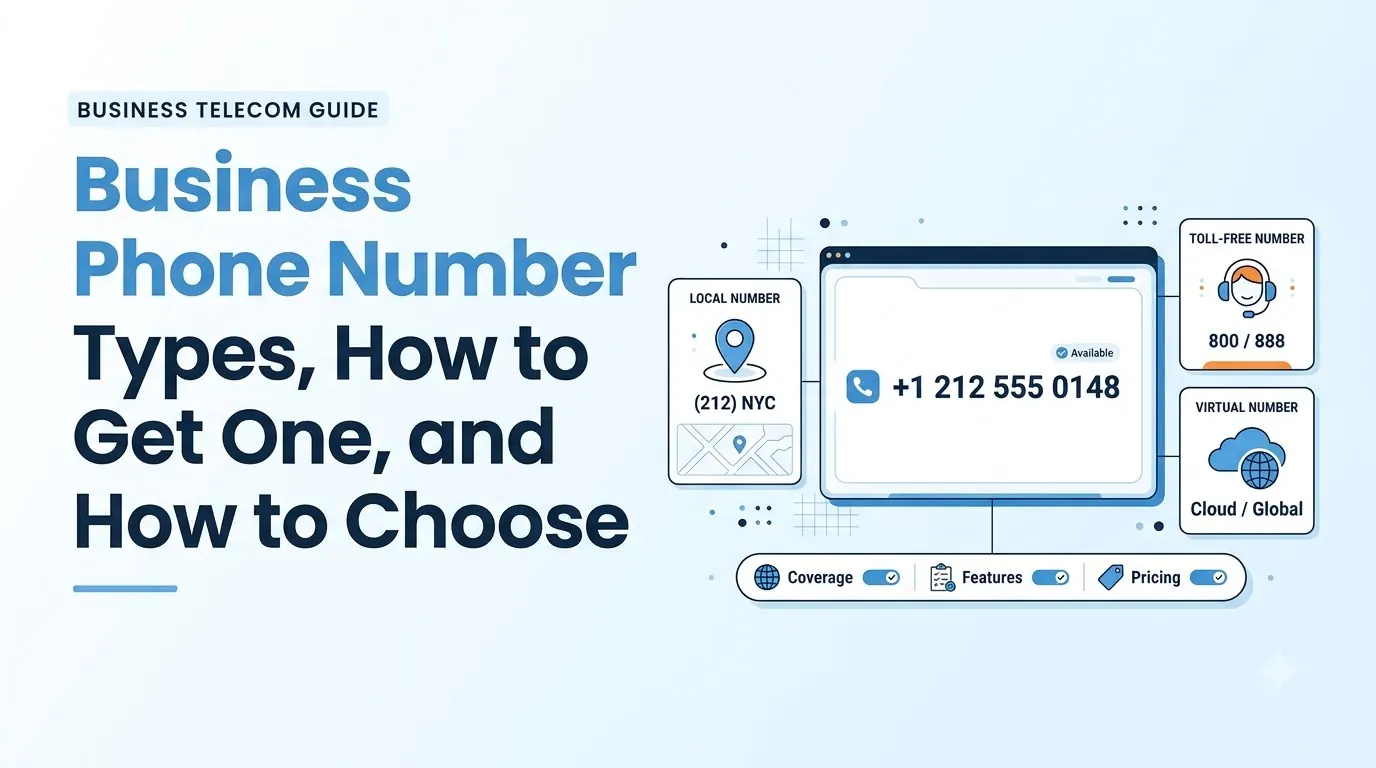
A business phone number is the number that your customers will call and see. This could be a local number with an area code, a toll-free number, a vanity number or even an international number.
They can also ring on a range of devices including mobile apps, laptops and desk phones.
Choosing the right business phone number can impact how often you receive calls and how professional you appear, and it enables your team to work from anywhere.
This guide shows you the main business phone number types, how to get one, how to move an existing one and how to choose the right one.
- Understanding what a business phone number is and why it matters
- Comparing local, toll-free, vanity and international numbers
- How to get one
- How to keep your existing number
- Caller ID, texting and common mistakes
What Is a Business Phone Number?
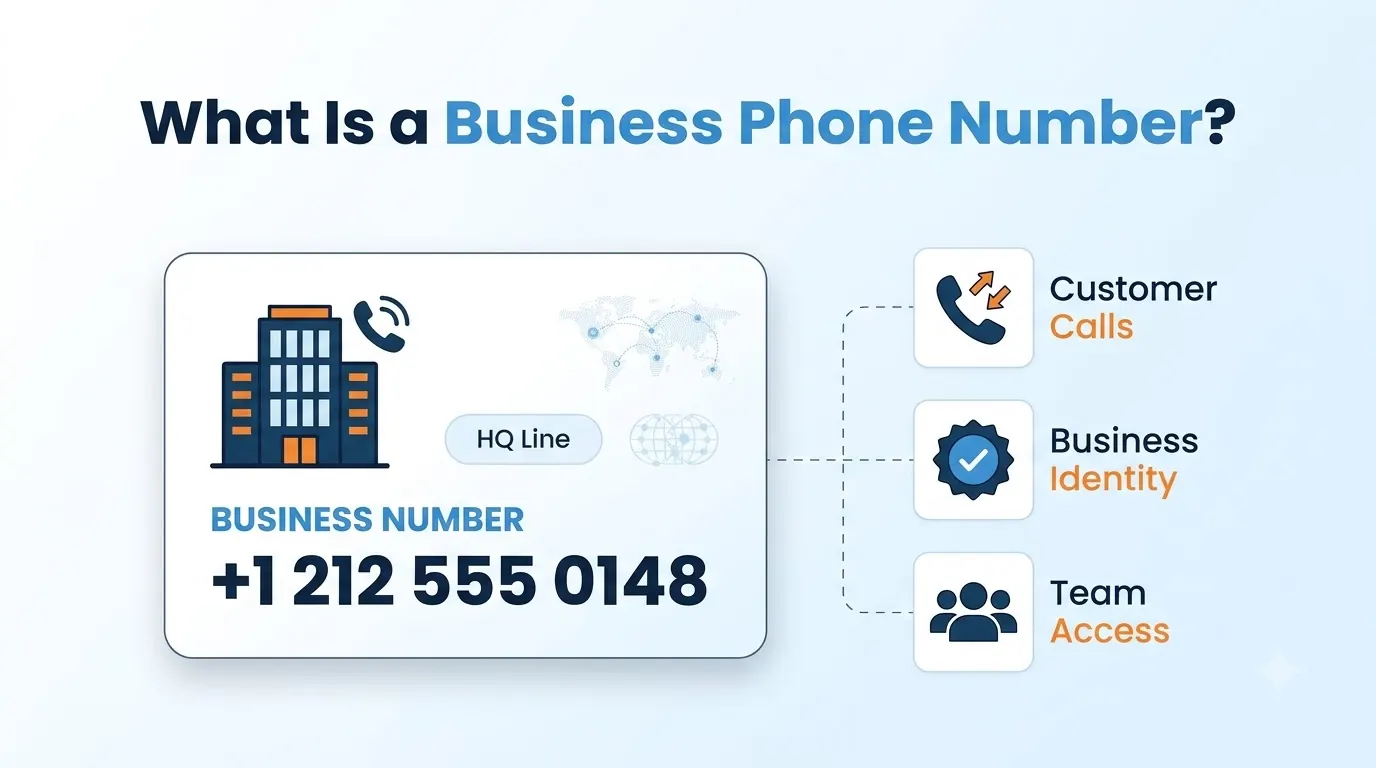
A business phone number is the number you use for customers to call you and text you. This is completely separate from any employee’s personal phone number. Customers will call the number and your team can answer it on whatever device they’re using.
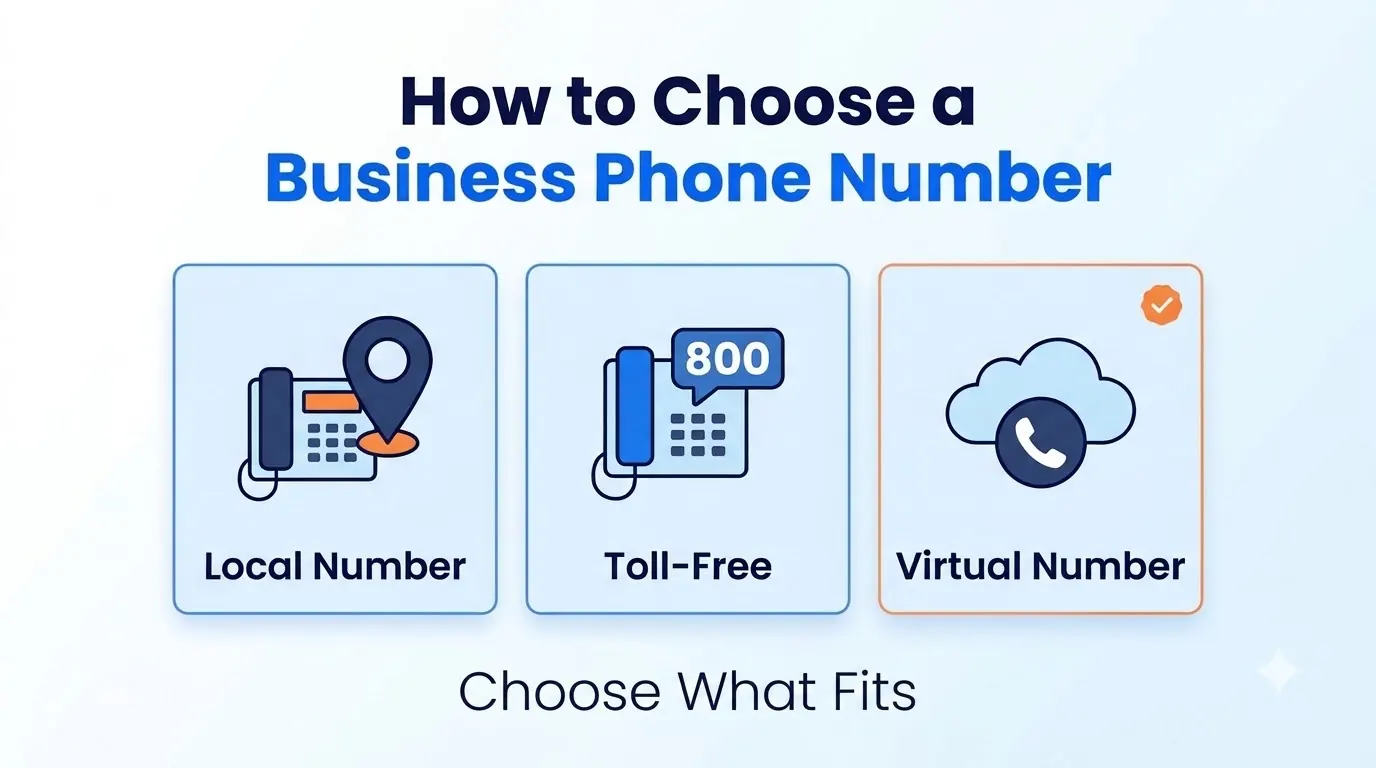
Most business numbers are now virtual. This means they’re not linked to any one line or phone. They can be provisioned with a provider and will ring on a mobile app, desktop application, desk phone or team queue.
This allows small teams or those working remotely to have the same number no matter who is answering.
Types of Business Phone Numbers
There are four main types of business phone number. Teloz offers local, toll-free and international numbers within our Virtual Phone Numbers product. The table can be used as a checklist when choosing a provider.
| Type | Description | Best for |
|---|---|---|
| Local | A number with a geographical area code such as 415 or 212. | To build a local presence and increase trust in a city or region. |
| Toll-free | A number with an 800, 888, 877, 866, 855, 844 or 833 prefix. | For national customer service and sales lines. |
| Vanity | A number based on a word or memorable pattern. | To improve brand recognition in advertising or signage. |
| International | A number that can be dialed locally in another country. | To provide service for customers in another country without long distance charges. |
Many businesses will use multiple numbers. A local number for a city office, a toll-free number for national support and an international number for a market overseas. All going to the same team.
Business Phone Number vs Business Phone System
A phone number is simply an address to call. The phone system determines how calls will be handled, whether you get a greeting, menu, queue, voicemail or ring group.
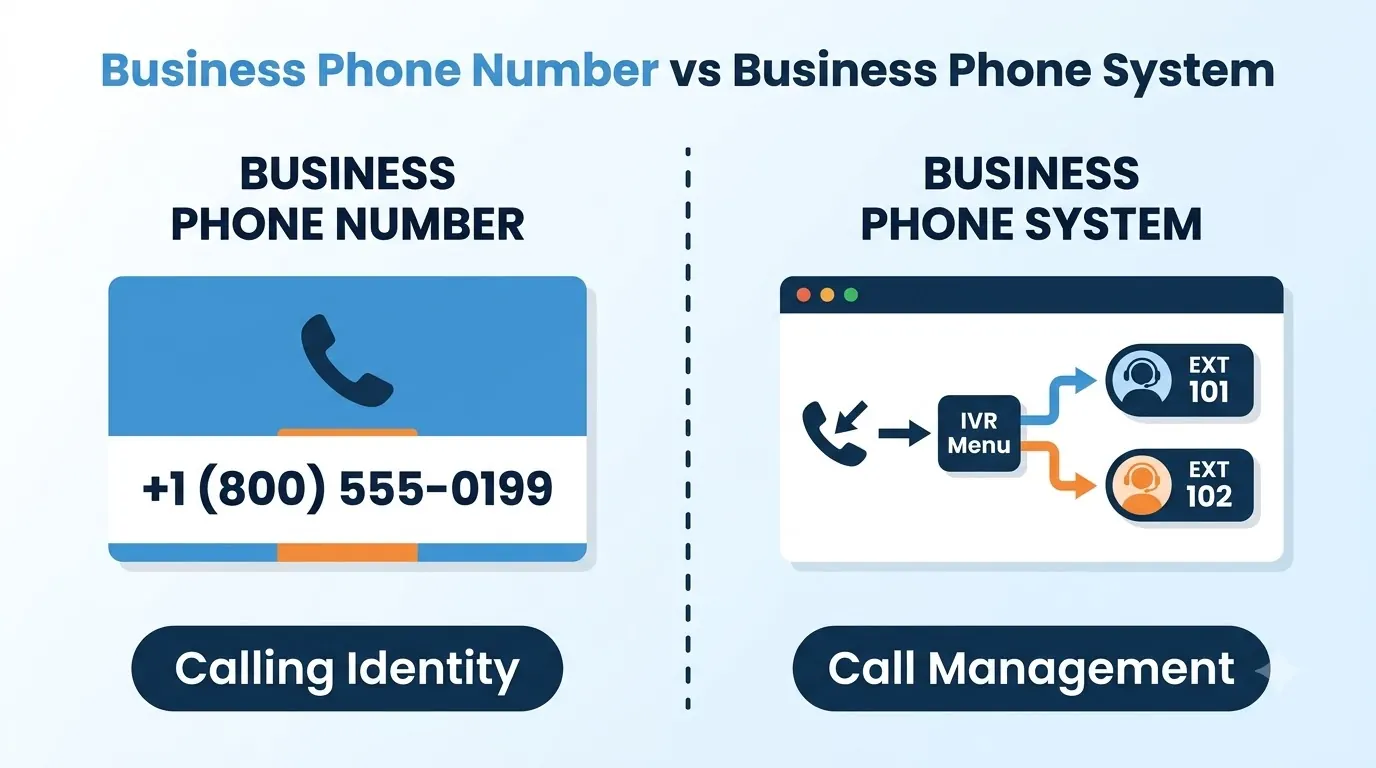
We have a detailed guide to help you understand more about our Business Phone System.
Some providers offer just numbers whereas others offer numbers within their phone system. If you just need a number to send to mobiles then you may just want to go for a number-only solution.
If you want extensions, queues or recordings then we recommend going for a provider who offers both under one login.
How to Get a Business Phone Number
It only takes a few minutes to get a number from a cloud provider. Most providers will follow the same process:
- Decide on the type of number you want. Local, toll-free, vanity or international.
- Search for a number. Search by city/state or prefix. Teloz provides a full list of all area codes in the USA and 7 prefixes for toll-free numbers.
- Claim and activate your number. Once you’ve chosen a number it can be activated quickly. Teloz can provision in minutes.
- Set your routing. Calls can be routed based on time, location or skill. You can also add voicemail to email for missed calls.
- Add caller ID and texting. Ensure you have your business name on outgoing calls. Enable business SMS if needed.
- Test all call routes. Test by calling on mobile and landline in and out of hours.
How to Keep Your Existing Business Phone Number
You don’t have to lose your existing number. Porting is the process of moving to a new provider. The number will stay the same.
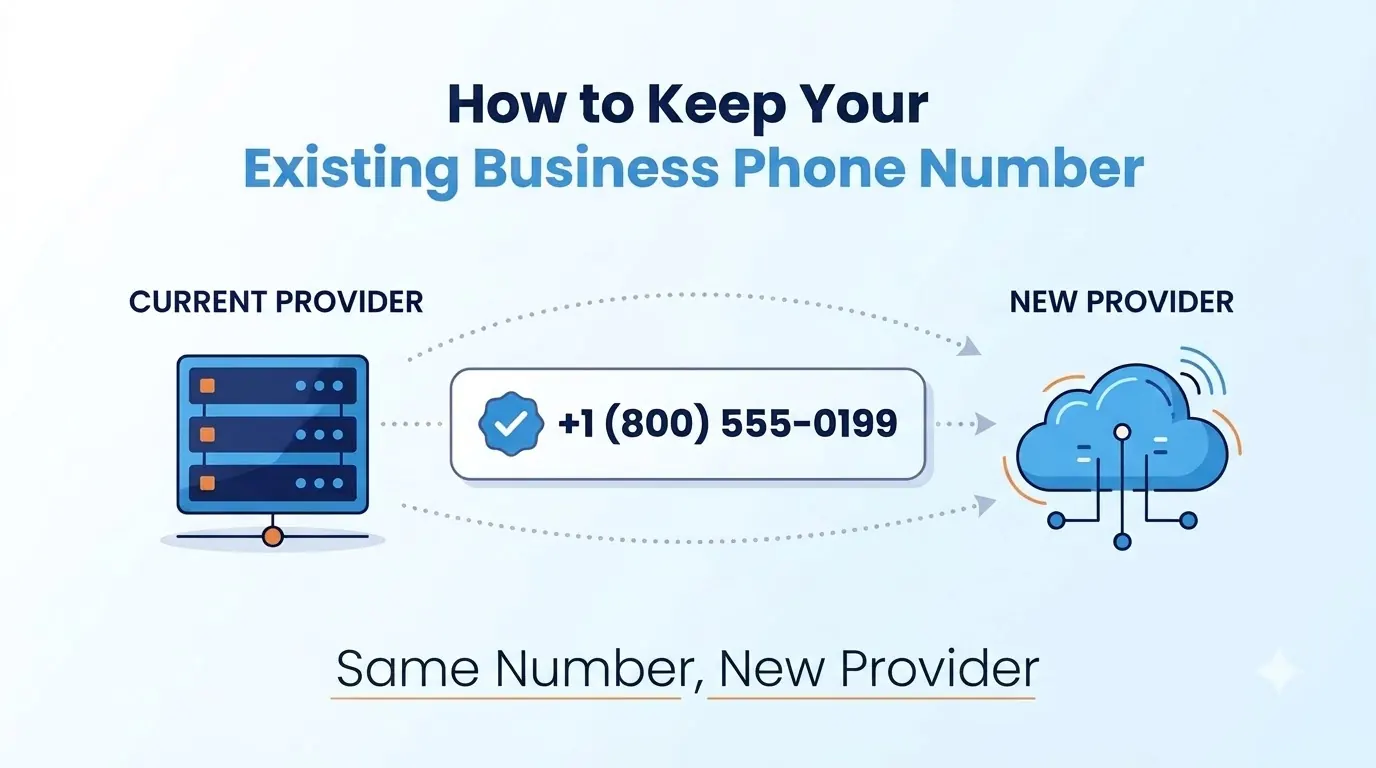
Typically there are 5 steps to porting:
- Gather your most recent carrier bill and account details. Sign a Letter of Authorization.
- Submit your request to your current carrier.
- Set up your routing, voicemail and queues.
- Port on the confirmed date.
- Test your calls. There will be a short period where you can back out.
Teloz has a list of steps to port your number on our number porting page. It’s free to port in.
Some numbers can’t be ported. These include numbers locked by the losing carrier, numbers with an account dispute and some prepaid mobile numbers. Ask your provider how they handle these scenarios. You’ll also want to ask for a written confirmation on how long it will take to port. This can vary depending on the number type and carrier.
Caller ID, Texting and Trust
A number won’t be useful if people aren’t answering. Outgoing calls should have your business name.
Your calls can be signed at carrier level to help show they’re genuine. Teloz states that outgoing calls will show your business name to USA destinations.
Calls will be signed with STIR/SHAKEN.
Be honest with your numbers.
It is illegal to knowingly cause false or inaccurate caller ID information with the intention to defraud, cause harm or gain something of value improperly under federal law (47 U.S.C. § 227(e)).
Ensure you’re showing the number you actually own.
Texting needs to be set up. If you’re texting from a local number you need to register with the carrier.
Toll-free texting will need verification. Teloz local numbers are 10DLC ready and we also handle verification for toll-free SMS.
Ensure your provider does likewise.
How to Choose a Business Phone Number
To choose the right number consider who will be calling. Consider:
- Who will be calling? Local customers will like a local area code. National customers will expect a toll-free number.
- Is it easy to remember and say? Choose a number that’s easy to say out loud. Vanity patterns can help.
- Do you need texting? Ensure it will support business SMS/MMS. Registration should be provided.
- Can you port it? Choose a provider who can port numbers in and out. Ask about costs for both.
- Will it scale? Ensure you can add more numbers, users and locations without changing your main number.
- Does it integrate with your tools? Ensure it will ring on your mobile app, desk phones and Microsoft Teams (if applicable).
“A number without a name is less likely to be answered.”
Common Mistakes When Choosing a Business Phone Number
Most people will regret making these mistakes:
- Using a personal mobile number. This blends personal and business and can’t be moved to a colleague.
- Not choosing a number that can be ported. Ensure it can be ported before printing.
- Not setting up caller ID. A number without a name is less likely to be answered.
- Not considering texting. Business texting without registration can be filtered or blocked.
- Purchasing a number that’s too specific. Rarely will one local number be enough if you’re serving more than one market.
Most of these can be avoided by completing a quick checklist with those answering the phone.
Conclusion
The most visible part of your phone setup will be your business phone number. Choose one that suits who will be calling.
Local numbers help build trust in a region, toll-free for national lines, vanity for increased recognition and international to open up new markets.
Choose the right type, ensure texting and caller ID are supported, check it can be ported in and out and test all call routes. This will ensure your next business phone number will continue to work as your team grows.


